
 BOOK AN APPOINTMENT
Women’s Health & Mental Wellness
One in five new mothers in Dubai experiences postpartum depression — yet most suffer in silence for months, convinced it is just tiredness, just adjustment, just the price of motherhood. It is not. Baby blues, postpartum depression, and postpartum psychosis are three distinct conditions with very different implications. Dr. Shabana Muzaffar (OB-GYN) and Dr. Balu Pitchiah (Psychiatrist) at Chughtai Clinic Dubai Healthcare City explain the real differences, what PPD actually feels like beyond “just sadness,” why Dubai’s expat environment makes it harder, whether antidepressants are safe while breastfeeding, and exactly when and how to get help.
PCOS vs PCOD Dubai: Key Differences & Treatment 2026
PCOS vs PCOD in Dubai: The Complete 2026 Guide to Differences, Symptoms, Diagnosis, Treatment & Cost
Written & Reviewed by Dr. Shabana Muzaffar
Consultant Obstetrician & Gynecologist · Chughtai Clinic Dubai Healthcare City · Building 47, DHCC Dubai UAE · PCOS & Women's Health Specialist
DHA Licensed — Verified SpecialistIf you have been researching PCOS and PCOD in Dubai, you have almost certainly noticed these two terms used interchangeably by clinics, on health forums, even sometimes by general practitioners. This confusion is not harmless. PCOS (Polycystic Ovary Syndrome) and PCOD (Polycystic Ovarian Disease) are related but fundamentally different conditions with different severity, different long-term health risks, different treatment approaches, and different implications for fertility. Treating one as if it were the other can mean years of inadequate management.
In the UAE, where polycystic ovary-related conditions affect an estimated 15–18% of women of reproductive age significantly higher than the global average this confusion has real consequences for thousands of women navigating irregular periods, hormonal imbalance, unwanted hair growth, acne, weight management difficulties, and fertility challenges in Dubai's demanding lifestyle environment.
This comprehensive guide written by Dr. Shabana Muzaffar, consultant OB-GYN at Chughtai Clinic Dubai Healthcare City provides the most detailed comparison of PCOS and PCOD available for UAE women: exact definitions, symptom differences, diagnostic criteria, treatment protocols, diet plans, fertility guidance, and specialist women's health care costs in Dubai 2026.
PCOD is a common ovarian condition where immature eggs accumulate as cysts due to hormonal imbalance milder, often reversible with lifestyle changes. PCOS is a complex metabolic and endocrine syndrome with elevated androgens, insulin resistance, disrupted ovulation, and broader health implications. PCOS is more serious and requires structured medical management. Both are diagnosed and treated at Chughtai Clinic Dubai: +971 52 619 8738
- PCOD Full Definition & Explanation
- PCOS Full Definition & Explanation
- PCOS vs PCOD Master Comparison
- Symptoms What Each Condition Feels Like
- Can PCOD Turn Into PCOS?
- Diagnosis How Both Are Identified in Dubai
- PCOS & PCOD in Dubai UAE-Specific Factors
- Treatment for PCOS in Dubai
- Treatment for PCOD in Dubai
- PCOS Diet Plan Dubai Complete Guide
- PCOS and Pregnancy Fertility Guide Dubai
- Long-Term Health Risks
- PCOS Treatment Costs Dubai 2026
- Insurance Coverage UAE
- Frequently Asked Questions
1. What Is PCOD? Polycystic Ovarian Disease Explained
PCOD (Polycystic Ovarian Disease), also referred to as polycystic ovarian syndrome in some older literature, is a condition in which the ovaries produce a larger than normal number of partially matured or immature eggs. These eggs accumulate in the ovaries and over time form fluid-filled cysts. The ovaries become enlarged and continue to produce excess male hormones (androgens), leading to the characteristic symptoms of irregular periods, acne, and unwanted hair growth.
PCOD is primarily a condition of the ovaries it is driven largely by hormonal imbalance and lifestyle factors including poor diet, lack of physical activity, stress, and weight gain. Unlike PCOS, PCOD does not fundamentally impair ovulation in most cases, and many women with PCOD can conceive naturally with minimal intervention.
Key Characteristics of PCOD
- Ovaries produce immature or partially mature eggs that accumulate as cysts
- Relatively common affects up to 1 in 3 women in some populations
- Often triggered or worsened by lifestyle factors diet, stress, weight
- Ovulation usually present but may be irregular
- Fertility generally preserved many women with PCOD conceive without assistance
- Androgen elevation is milder than in PCOS
- Responds well to lifestyle modification alone in many cases
- Does not typically involve significant insulin resistance
PCOD is often reversible with lifestyle changes. Women in Dubai who improve their diet, increase physical activity, reduce stress, and maintain a healthy weight frequently see significant improvement in PCOD symptoms including restoration of regular menstrual cycles without requiring medication.
2. What Is PCOS? Polycystic Ovary Syndrome Explained
PCOS (Polycystic Ovary Syndrome) is a complex endocrine and metabolic disorder not simply an ovarian condition that affects multiple body systems simultaneously. It is characterised by a triad of features: hyperandrogenism (elevated male hormones), ovulatory dysfunction (irregular or absent ovulation), and polycystic ovarian morphology (multiple follicles visible on ultrasound). However, a woman need not have all three to be diagnosed this is a common misconception.
PCOS involves significant insulin resistance, chronic low-grade inflammation, and disruption to the hypothalamic-pituitary-ovarian axis the hormonal communication pathway between the brain and the ovaries. This is why PCOS carries broader metabolic health implications beyond reproductive health, including elevated risk of Type 2 diabetes, cardiovascular disease, and endometrial conditions.
PCOS is officially recognised as a metabolic syndrome by the WHO, the European Society of Human Reproduction and Embryology (ESHRE), and the American College of Obstetricians and Gynecologists (ACOG) all of which guide PCOS management protocols in Dubai's DHA-regulated healthcare system.
Key Characteristics of PCOS
- Complex endocrine syndrome affects ovaries, adrenal glands, metabolism, and brain hormonal axes
- Elevated androgen levels testosterone, DHEA-S causing more severe symptoms
- Insulin resistance in 70% of cases driving weight gain, acne, and hormonal disruption
- Ovulation often absent or severely irregular primary cause of PCOS-related infertility
- More severe fertility implications medical intervention typically required
- Does not resolve with lifestyle changes alone in most cases medication usually needed
- Long-term health risks including Type 2 diabetes, cardiovascular disease, endometrial hyperplasia
- Diagnosed using Rotterdam Criteria requires meeting 2 of 3 specific clinical features
PCOS is a lifelong condition that does not disappear after puberty or with pregnancy. It requires ongoing management and regular monitoring for associated metabolic conditions. However, with the right treatment plan, the vast majority of women with PCOS in Dubai lead healthy, fulfilling lives and can conceive successfully.
3. PCOS vs PCOD The Master Comparison
This is the most comprehensive PCOS vs PCOD comparison table for UAE and Dubai women covering every clinically relevant difference between polycystic ovary syndrome and polycystic ovarian disease.
PCOD
PCOS
| Feature | PCOD | PCOS |
|---|---|---|
| Full Name | Polycystic Ovarian Disease | Polycystic Ovary Syndrome |
| Classification | Ovarian Condition | Endocrine / Metabolic Syndrome |
| Prevalence in UAE | ~30% of women (common) | ~15–18% of women (higher than global) |
| Primary Cause | Hormonal imbalance + lifestyle | Genetic + insulin resistance + androgen excess |
| Androgen Levels | Mildly elevated | Significantly elevated (testosterone, DHEA-S) |
| Ovulation | Irregular but usually present | Absent or severely irregular (anovulation) |
| Insulin Resistance | Less common | Present in ~70% of cases |
| Menstrual Cycle | Irregular delayed or skipped periods | Often absent for months (oligomenorrhea / amenorrhea) |
| Weight Gain | Common but not universal | Very common linked to insulin resistance |
| Acne | Mild to moderate | Moderate to severe jaw and back acne |
| Hirsutism (Excess Hair) | Mild facial hair | More pronounced facial, chest, abdomen |
| Hair Loss (Scalp) | Possible | More common male pattern thinning |
| Fertility Impact | Mild most conceive naturally | Significant leading cause of anovulatory infertility |
| Ultrasound Findings | Multiple cysts in ovaries | Multiple small follicles + enlarged ovarian volume |
| Blood Test Markers | Mildly elevated androgens | Elevated LH, testosterone, AMH; insulin resistance markers |
| Mood and Mental Health | Mild anxiety, mood swings | Higher risk of anxiety, depression, body image issues |
| Long-Term Risks | Lower manageable with lifestyle | Type 2 diabetes, cardiovascular disease, endometrial cancer risk |
| Treatment Approach | Lifestyle first; medication if needed | Medication + lifestyle + long-term monitoring |
| Is It Reversible? | Often yes | Lifelong managed, not cured |
4. PCOS and PCOD Symptoms What Each Condition Feels Like
Many symptoms of polycystic ovary syndrome and polycystic ovarian disease overlap which is precisely why so many Dubai women receive the wrong diagnosis or find it difficult to distinguish between the two conditions without specialist assessment. The key differences lie in severity, pattern, and metabolic involvement.
Symptom severity varies significantly between individuals. Clinical diagnosis is essential self-diagnosis based on symptoms alone is not reliable. Always consult a DHA-licensed gynecologist.
Understanding the Overlap Why Women Get Confused
Both PCOS and PCOD involve ovaries with multiple cysts on ultrasound, elevated androgen levels, irregular menstruation, and weight management difficulties. However, the severity and underlying mechanism differ significantly. A woman with PCOD may have only one or two symptoms perhaps delayed periods and mild acne. A woman with PCOS typically has multiple symptoms that are more pronounced, persistent, and resistant to simple lifestyle changes.
In Dubai's clinical setting, Dr. Shabana Muzaffar sees many patients who have been told "you have PCOS" based on an ultrasound showing cysts without the full hormonal panel, clinical assessment, and Rotterdam Criteria evaluation that a proper diagnosis requires. An ultrasound finding of ovarian cysts alone does not confirm PCOS.
5. Can PCOD Turn Into PCOS? The Relationship Explained
This is one of the most commonly searched questions by women in Dubai and the UAE: "If I have PCOD, will it become PCOS?" The short answer is that PCOD does not directly "convert" into PCOS they are distinct conditions. However, the relationship between them is more nuanced than a simple yes or no.
PCOD and PCOS share some underlying hormonal pathways. If PCOD is left untreated particularly if combined with worsening insulin resistance, significant weight gain, poor diet, and chronic stress the hormonal environment can deteriorate to a point where the clinical picture begins to more closely resemble PCOS. This is not a transformation but a progression of hormonal dysfunction. Early treatment of PCOD significantly reduces this risk.
Factors That Can Worsen PCOD Toward PCOS-Like Presentation
- Unmanaged weight gain increases insulin resistance, driving androgen production higher
- Chronic psychological stress elevates cortisol, which disrupts hormonal axes
- Poor diet high refined carbohydrate intake worsens insulin sensitivity
- Physical inactivity exacerbates metabolic dysfunction
- Sleep deprivation disrupts cortisol and sex hormone regulation
- Ignoring symptoms delayed diagnosis means longer-term hormonal disruption
The key message for Dubai women: early intervention with PCOD prevents progression. Getting a proper diagnosis from a DHA-licensed gynecologist like Dr. Shabana Muzaffar at Chughtai Clinic, understanding your hormonal profile, and taking appropriate lifestyle action is the most effective protective measure.
6. How PCOS and PCOD Are Diagnosed in Dubai
Accurate diagnosis of both polycystic ovary syndrome and polycystic ovarian disease in Dubai requires a comprehensive clinical assessment not simply an ultrasound. Many women in the UAE are given an incorrect diagnosis because ovarian cysts on ultrasound are incorrectly equated with PCOS without the full clinical picture.
Diagnostic Process at Chughtai Clinic Dubai
Detailed Menstrual and Clinical History
Dr. Shabana Muzaffar begins with a thorough review of your menstrual history cycle length, regularity, flow, and any periods of amenorrhea (missed periods). Symptom onset, weight changes, acne pattern, hair changes, and family history of PCOS or diabetes are all recorded.
Physical Examination
Clinical signs of hyperandrogenism are assessed hirsutism (using the modified Ferriman-Gallwey score), acne severity, scalp hair density, and skin changes including acanthosis nigricans (darkening in skin folds a sign of insulin resistance).
Hormonal Blood Panel
A comprehensive hormonal blood test is ordered on Day 2–5 of the menstrual cycle where possible. This includes: FSH, LH (and LH:FSH ratio), total testosterone, free testosterone, DHEA-S, SHBG, prolactin, thyroid function (TSH, free T4), fasting insulin and glucose, AMH (Anti-Müllerian Hormone), HbA1c, lipid profile, and vitamin D. This panel distinguishes PCOS from PCOD and from other conditions that mimic both.
Pelvic Ultrasound Transvaginal or Transabdominal
A pelvic ultrasound assesses ovarian morphology follicle count, follicle size distribution, and ovarian volume. PCOS is associated with 20+ follicles per ovary (using current ESHRE 2024 criteria) and/or increased ovarian volume above 10ml. Ultrasound findings alone are insufficient to diagnose PCOS without the hormonal and clinical picture.
Rotterdam Criteria Application (PCOS)
For PCOS diagnosis, a patient must meet at least 2 of 3 Rotterdam Criteria: (1) irregular/absent ovulation, (2) clinical or biochemical hyperandrogenism, (3) polycystic ovarian morphology on ultrasound. PCOD diagnosis is made when ovarian cysts are present without meeting the full clinical threshold for PCOS.
Before confirming PCOS, a thorough gynecologist will rule out: thyroid disorders (hypothyroidism and hyperthyroidism), hyperprolactinaemia (elevated prolactin), late-onset congenital adrenal hyperplasia, Cushing's syndrome, and androgen-secreting tumours. All of these conditions produce similar symptoms to PCOS but require completely different treatments.
7. PCOS and PCOD in Dubai UAE-Specific Lifestyle Factors
Dubai and the wider UAE present a unique combination of environmental, dietary, and lifestyle factors that contribute to higher rates of PCOS and PCOD compared to many other regions. Understanding these context-specific drivers is essential for effective management which is why Dr. Shabana Muzaffar at Chughtai Clinic Dubai Healthcare City tailors management plans specifically to Dubai's lifestyle context.
Dubai's lifestyle environment creates conditions where hormonal disorders are more prevalent. The good news: these are modifiable factors lifestyle changes produce dramatic improvements in PCOS/PCOD management.
Why PCOS Affects Dubai's Expat Community Disproportionately
Beyond the general population, Dubai's large South Asian expatriate community women from Pakistan, India, Bangladesh, and Sri Lanka faces an elevated genetic predisposition to insulin resistance and metabolic syndrome. Combined with Dubai's sedentary lifestyle, high-carbohydrate cultural diets (biryani, bread-based meals, sweet chai, fresh juices), and work-related stress, this population experiences PCOS at particularly high rates. Dr. Shabana Muzaffar at Chughtai Clinic provides culturally sensitive, contextually appropriate dietary and lifestyle guidance tailored to South Asian and Middle Eastern food patterns.
8. PCOS Treatment in Dubai Complete Management Protocol
PCOS treatment in Dubai is guided by international evidence-based protocols primarily ESHRE/ASRM International Guidelines for PCOS Assessment and Management adapted to the DHA regulatory framework. At Chughtai Clinic, treatment is personalised based on the patient's specific PCOS phenotype, primary concerns (menstrual regulation, fertility, skin, weight, or metabolic health), and clinical findings.
| Treatment Goal | First-Line Treatment | Second-Line / Adjunct | Notes |
|---|---|---|---|
| Menstrual Regulation | Combined oral contraceptive pill (OCP) | Progesterone-only pill, hormonal IUD | Regulates cycle, reduces androgen-related symptoms |
| Hirsutism / Acne | Combined OCP (anti-androgenic) | Spironolactone, Cyproterone acetate | 6+ months for visible hair growth change |
| Insulin Resistance / Metabolic | Metformin + lifestyle modification | Inositol (Myo-inositol + D-chiro) | Reduces insulin, improves ovulation frequency |
| Ovulation Induction (Fertility) | Letrozole (first-line) | Clomiphene citrate, FSH injections | Monitored with serial ultrasound |
| Weight Management | 5–10% body weight reduction | GLP-1 agonists in some cases | Even modest weight loss restores ovulation |
| Psychological Wellbeing | CBT, lifestyle support | SSRI referral if needed | Anxiety and depression rates higher in PCOS |
| Long-term Metabolic Monitoring | Annual fasting glucose, HbA1c, lipids | Cardiovascular risk assessment | Diabetes prevention is key long-term goal |
9. PCOD Treatment in Dubai Management Approach
PCOD treatment in Dubai takes a lifestyle-first approach which is both good news and important news. Unlike PCOS, which typically requires long-term medication management, PCOD often responds dramatically to dietary modification, increased physical activity, stress reduction, and sleep improvement. Many women with PCOD who implement structured lifestyle changes see their menstrual cycles regulate, acne improve, and hormonal markers normalise within 3–6 months.
- Weight management 5–10% weight reduction if overweight significantly improves hormonal balance and menstrual regularity
- Low-glycemic diet reducing refined carbohydrates, sugar, and processed food normalises insulin and reduces androgen production
- Regular exercise 150 minutes of moderate aerobic activity per week plus strength training improves insulin sensitivity
- Stress management cortisol dysregulation worsens hormonal imbalance; mindfulness, adequate sleep, and work-life boundaries help
- Oral contraceptive pill prescribed when menstrual regulation is needed or acne/hirsutism is significant
- Hormonal therapy progesterone or combined OCP to regulate endometrial health if periods are very infrequent
- Monitoring annual review of hormonal panel and ultrasound to ensure PCOD is not progressing
10. PCOS Diet Plan for Dubai Women What to Eat and What to Avoid
Diet is the single most impactful lifestyle intervention for both PCOS and PCOD. The dietary approach targets the root metabolic driver: insulin resistance. By stabilising blood sugar through low-glycemic eating, the body produces less insulin which in turn reduces androgen production, improves ovulation, and alleviates many of the most distressing symptoms including acne, hirsutism, weight gain, and cycle irregularity.
At Chughtai Clinic Dubai, Dr. Shabana Muzaffar works alongside the Nutrition and Dietetics department to provide culturally appropriate dietary guidance specifically designed for Dubai's diverse women taking into account South Asian, Middle Eastern, and other dietary traditions.
Low-glycaemic eating is the most evidence-based dietary intervention for PCOS and PCOD. It reduces insulin levels, decreases androgen production, and improves menstrual regularity.
Best PCOS/PCOD Foods Dubai-Friendly
Avoid or Minimise PCOS Triggers in Dubai
PCOS and Ramadan Fasting Dubai-Specific Guidance
For Muslim women with PCOS or PCOD in Dubai, Ramadan fasting presents specific management considerations. Intermittent fasting during Ramadan can actually improve insulin sensitivity in PCOS but the timing and composition of Iftar and Suhoor meals significantly determine whether fasting helps or harms hormonal balance.
- Suhoor prioritise protein, healthy fats, and complex carbohydrates to stabilise blood sugar through the fasting hours
- Iftar break the fast with dates and water as tradition, then protein and vegetables before reaching for carbohydrates
- Avoid large quantities of fried foods, sweets, and high-sugar drinks common at Iftar gatherings
- Stay hydrated dehydration worsens cortisol and hormonal balance during non-fasting hours
- Discuss your PCOS medication schedule (particularly Metformin) with Dr. Shabana Muzaffar before Ramadan
11. PCOS, PCOD and Pregnancy in Dubai Fertility Guide
"Can I get pregnant with PCOS?" is the most emotionally loaded question Dr. Shabana Muzaffar hears from patients at Chughtai Clinic. The answer for the vast majority of women with both PCOS and PCOD is yes, with appropriate support.
PCOS is the most common cause of anovulatory infertility but it is also one of the most treatable causes of infertility. Most women with PCOS who receive appropriate medical care go on to have successful pregnancies. PCOD rarely significantly impairs fertility. Do not delay seeking assessment if you are trying to conceive.
PCOD Pregnancy Outlook
Most women with PCOD conceive naturally with lifestyle optimisation. Ovulation is usually present, though irregular. Weight management and dietary improvements often restore regular cycles within 3–6 months, enabling natural conception. Fertility treatment is rarely needed for PCOD alone.
Lifestyle Optimisation First
Even 5–10% weight reduction in overweight PCOS patients restores ovulation in a significant proportion. Diet, exercise, and stress management are always first-line. This is tried for 3–6 months before proceeding to medication.
Ovulation Induction Letrozole
Letrozole (an aromatase inhibitor) is the first-line medication for ovulation induction in PCOS now preferred over Clomiphene based on ESHRE 2024 guidelines. It is taken orally on Days 2–6 of the cycle. Ovulation is confirmed by serial ultrasound monitoring.
Metformin Support
Metformin improves insulin sensitivity and enhances the effectiveness of ovulation induction in insulin-resistant PCOS. It is often used alongside Letrozole and may be continued into the first trimester to reduce miscarriage risk.
Ultrasound Monitoring
Once on ovulation induction, follicle growth is tracked via serial transvaginal ultrasound. This confirms ovulation is occurring and allows optimal timing of conception or insemination.
IVF Referral if Needed
If multiple cycles of ovulation induction are unsuccessful, referral for IVF is discussed. Women with PCOS generally respond well to IVF stimulation but require careful protocols to avoid OHSS (ovarian hyperstimulation syndrome). Dr. Shabana Muzaffar will refer to a trusted fertility specialist when needed.
Pregnancy Monitoring with PCOS What to Expect
Once pregnant with PCOS, certain complications have a higher prevalence and should be monitored proactively throughout the pregnancy:
| Risk | Reason | Monitoring in Dubai |
|---|---|---|
| Gestational Diabetes | Pre-existing insulin resistance worsens in pregnancy | Early glucose tolerance test (GTT) at 16 weeks + repeat at 24–28 weeks |
| Pregnancy-Induced Hypertension | Metabolic and vascular PCOS effects | Regular BP monitoring from first trimester |
| Miscarriage (First Trimester) | Hormonal imbalance; insulin resistance | Early viability scan; Metformin continuation discussed |
| Preterm Birth | Slightly elevated risk in PCOS studies | Regular growth scans; progesterone support discussed |
| Large Baby (Macrosomia) | Insulin resistance affects fetal growth | Third trimester growth scans; glucose management |
12. Long-Term Health Risks Why PCOS Needs Lifelong Management
PCOS is not just a reproductive condition it has significant long-term metabolic and cardiovascular health implications that make ongoing management essential even in post-reproductive years. Understanding these risks is one of the most important reasons to take PCOS seriously beyond the immediate concerns of periods and fertility.
Type 2 Diabetes
Women with PCOS have a 3–7x higher risk of developing Type 2 diabetes. Insulin resistance present in 70% of PCOS cases is the primary driver. Annual HbA1c monitoring is essential.
Cardiovascular Disease
Elevated androgens, insulin resistance, and dyslipidaemia (abnormal cholesterol) increase cardiovascular risk. Annual lipid panel and blood pressure monitoring recommended from age 40.
Endometrial Hyperplasia
Infrequent periods mean the uterine lining is not shed regularly increasing risk of endometrial thickening and, in some cases, endometrial cancer. Regular menstruation must be maintained.
Sleep Apnoea
Women with PCOS have a significantly higher prevalence of obstructive sleep apnoea driven by obesity and hormonal factors. Often undiagnosed.
Mental Health
PCOS carries a significantly elevated risk of anxiety, depression, and body dysmorphia driven by the visible symptoms of hirsutism, acne, and weight changes. Psychological support is an important part of comprehensive PCOS care.
PCOD Risks (Lower)
PCOD carries lower long-term health risks than PCOS. If well-managed, most women with PCOD do not develop significant metabolic complications. Irregular cycles should still be monitored to protect endometrial health.
13. PCOS and PCOD Treatment Costs in Dubai 2026
All prices in AED, Dubai market 2026. Insurance coverage significantly reduces out-of-pocket costs. Contact Chughtai Clinic for pre-authorisation assistance.
14. Insurance Coverage for PCOS/PCOD in Dubai UAE
Most UAE health insurance plans cover PCOS and PCOD diagnosis and treatment as a standard gynaecological condition. Key coverage considerations for Dubai residents:
| Insurance Plan | PCOS Consultation | Blood Tests | Ultrasound | Fertility Treatment |
|---|---|---|---|---|
| Daman (Basic) | Usually covered | Usually covered | Partial | Rarely covered |
| Daman (Enhanced) | Covered | Covered | Covered | Limited check plan |
| AXA / Cigna (Corporate) | Covered | Covered | Covered | Varies by plan |
| MetLife / MedNet | Usually covered | Usually covered | Varies | Usually excluded |
| NAS / NextCare | Covered with pre-auth | Partial | Partial | Excluded |
PCOS is typically covered under gynaecology specialty. Fertility treatment (ovulation induction, IVF) is often separately excluded or has annual sub-limits. Contact Chughtai Clinic at +971 52 619 8738 to verify your specific coverage before booking the team handles pre-authorisation directly. See our insurance partners page for detailed information.
Book Your PCOS or PCOD Consultation in Dubai
Dr. Shabana Muzaffar — Consultant OB-GYN · DHA Licensed · Chughtai Clinic Dubai Healthcare City
Same-day appointments · Insurance accepted · Culturally sensitive care for all backgrounds
Frequently Asked Questions PCOS vs PCOD Dubai
PCOD (Polycystic Ovarian Disease) is an ovarian condition where immature eggs accumulate as cysts due to hormonal imbalance and lifestyle factors. It is milder, more common, and often reversible with lifestyle changes. PCOS (Polycystic Ovary Syndrome) is a complex endocrine and metabolic syndrome involving elevated androgens, insulin resistance, and disrupted ovulation with broader long-term health implications including diabetes and cardiovascular risk. PCOS requires structured medical management; PCOD may respond to lifestyle changes alone.
PCOS is more serious than PCOD. PCOS is a complex metabolic syndrome with long-term health implications including elevated risk of Type 2 diabetes, cardiovascular disease, and endometrial conditions. It requires lifelong management and monitoring. PCOD is a more localised ovarian condition that is generally milder and often reversible with lifestyle changes. However, both conditions require medical assessment and should not be ignored.
PCOS is estimated to affect approximately 15–18% of women of reproductive age in the UAE significantly higher than the global average of 1 in 10. PCOD is even more common, affecting up to 1 in 3 women in some population studies. Dubai's lifestyle factors sedentary behaviour, high-carbohydrate diet, chronic work stress, Vitamin D deficiency, and poor sleep contribute to the higher regional prevalence.
PCOD does not directly convert into PCOS they are distinct conditions. However, if PCOD is left untreated and is combined with worsening insulin resistance, significant weight gain, and chronic stress, the hormonal environment can deteriorate to closely resemble PCOS clinically. Early lifestyle intervention with PCOD significantly reduces the risk of hormonal progression. Regular monitoring with a DHA-licensed gynecologist is recommended.
PCOS is diagnosed using the Rotterdam Criteria a patient must meet at least 2 of 3 criteria: (1) irregular or absent ovulation, (2) clinical or biochemical hyperandrogenism, (3) polycystic ovarian morphology on ultrasound. Diagnosis requires a detailed clinical history, physical examination, comprehensive hormonal blood panel (LH, FSH, testosterone, AMH, insulin, thyroid), and pelvic ultrasound. An ultrasound showing cysts alone is not sufficient to diagnose PCOS. At Chughtai Clinic, Dr. Shabana Muzaffar performs a complete assessment including ruling out thyroid disorders and other mimicking conditions.
Yes the vast majority of women with PCOS can conceive with appropriate medical support. PCOS is the most common cause of anovulatory infertility, but it is also one of the most treatable. Lifestyle optimisation alone restores ovulation in many cases. When needed, medications such as Letrozole or Clomiphene are highly effective for ovulation induction. Dr. Shabana Muzaffar at Chughtai Clinic Dubai Healthcare City provides comprehensive PCOS fertility management with excellent outcomes.
The best PCOS diet focuses on low-glycaemic index foods that stabilise blood sugar and reduce insulin resistance. Eat freely: leafy greens, dal and legumes, fish, eggs, oats, quinoa, nuts, and berries. Reduce or avoid: white rice in large portions, sugary drinks and fresh juices, naan and white bread, sweetened chai, energy drinks, and processed foods. A 5–10% weight reduction through dietary changes significantly improves hormonal balance and menstrual regularity. Our Nutrition Department at Chughtai Clinic provides culturally tailored PCOS meal plans.
A PCOS gynecology consultation in Dubai costs AED 350–700 for an initial assessment. A complete PCOS workup including consultation, hormonal blood panel, and pelvic ultrasound costs AED 500–1,200. Follow-up visits cost AED 200–400. Ongoing Metformin or OCP prescription is covered by most insurance plans. Most UAE health insurance plans cover PCOS diagnosis and management as a standard gynaecological condition. Contact Chughtai Clinic at +971 52 619 8738 to verify your coverage.
A comprehensive PCOS blood panel includes: LH and FSH (and LH:FSH ratio), total and free testosterone, DHEA-S, SHBG, AMH (Anti-Müllerian Hormone the most sensitive PCOS marker), prolactin, TSH and free T4 (thyroid), fasting insulin and glucose, HbA1c, lipid profile, and Vitamin D. Blood tests are ideally taken on Day 2–5 of the menstrual cycle. At Chughtai Clinic, all tests are ordered in a single visit and results reviewed comprehensively.
PCOS does not go away permanently after pregnancy or menopause. Pregnancy may temporarily suppress some PCOS symptoms, but the underlying metabolic condition persists after delivery. After menopause, the reproductive symptoms (irregular periods, fertility issues) are no longer relevant but the metabolic risks (insulin resistance, cardiovascular risk, diabetes) remain and may increase. PCOS requires long-term management across all life stages. PCOD, however, may improve significantly with lifestyle changes and sometimes resolves in women who maintain a healthy weight and active lifestyle.
Yes, PCOS has a significant genetic component. Women with a first-degree relative (mother or sister) with PCOS have a higher risk of developing the condition themselves. However, genetics is only one factor lifestyle, diet, body weight, and environmental factors also play a significant role. Having PCOS does not mean a daughter will definitely develop it. Early education about healthy lifestyle habits, maintaining a healthy weight from adolescence, and prompt assessment if symptoms appear gives the best protective outcomes.
Metformin is a medication originally developed for Type 2 diabetes that is widely used in PCOS management. It works by improving insulin sensitivity reducing insulin levels in the blood, which in turn decreases androgen production by the ovaries. In PCOS, Metformin helps regulate menstrual cycles, supports weight management, reduces acne and hirsutism, and improves ovulation frequency. It is also used alongside ovulation induction medications to improve fertility outcomes. Metformin must be prescribed by a licensed physician Dr. Shabana Muzaffar assesses suitability at Chughtai Clinic.
Yes. The combined oral contraceptive pill (OCP) is one of the most commonly used treatments for PCOS in Dubai for women not currently trying to conceive. It works by suppressing androgen production, regulating the menstrual cycle, reducing acne and hirsutism, and protecting the endometrial lining. In Dubai, the OCP is available with a prescription from a DHA-licensed physician. Dr. Shabana Muzaffar selects the most appropriate formulation based on each patient's specific hormonal profile and health history.
Yes. Scalp hair loss (androgenetic alopecia or female pattern hair loss) is a common and distressing symptom of PCOS, caused by elevated androgens particularly DHT acting on hair follicles. Treatment includes: anti-androgen medications (spironolactone), OCP with anti-androgenic activity (Diane-35 or Yasmin), Metformin (reduces the androgen drive), topical Minoxidil, and nutritional support (Vitamin D, iron, B12 are all commonly deficient in PCOS and worsen hair loss). Hair growth improvements take 6–12 months of consistent treatment.
At Chughtai Clinic Dubai Healthcare City Building 47, DHCC Dr. Shabana Muzaffar, DHA-licensed Consultant Obstetrician and Gynecologist, provides comprehensive PCOS and PCOD diagnosis and management. Services include complete hormonal workup, pelvic ultrasound, Metformin and OCP management, fertility support, dietary guidance, and long-term metabolic monitoring. Same-day appointments are available. Book via WhatsApp: +971 52 619 8738 or at chughtaiclinic.ae/appointment
Conclusion
PCOS and PCOD are not the same condition and the difference matters profoundly for how they are managed, how fertility is approached, and what long-term health monitoring is needed. In Dubai's high-prevalence environment, getting the correct diagnosis from a DHA-licensed gynecologist is the most important first step.
Whether you are experiencing irregular periods and wondering if it is PCOS or PCOD, navigating the emotional and physical challenges of polycystic ovary syndrome, managing unwanted hair growth or acne, or trying to conceive with a PCOS diagnosis you are not alone, and evidence-based treatment produces excellent outcomes for the vast majority of women.
At Chughtai Clinic Dubai Healthcare City, Dr. Shabana Muzaffar provides comprehensive, culturally sensitive women's health care with the clinical precision and the personal attention that every patient deserves. From initial diagnosis through fertility support, dietary guidance, and long-term management same-day appointments are available.
Book Your PCOS / PCOD Assessment Today
Dr. Shabana Muzaffar · Consultant OB-GYN · DHA Licensed
Building 47, Dubai Healthcare City · Mon–Sat 9AM–9PM · Same-day appointments available
Related Articles
Psychiatrist vs Psychologist Dubai | Which Do You Need? 2026
Psychiatrist vs Psychologist in Dubai: Which One Do You Actually Need? The Complete 2026 Guide
Written & Reviewed by Dr. Balu Pitchiah
Physician Consultant Psychiatry · MRCPsych (UK) · MBA Oxford · Integrated Functional Psychiatry · Chughtai Clinic, Building 47, DHCC Dubai
DHA Licensed — Verified Specialist"Should I see a psychiatrist or a psychologist?" this is one of the most searched mental health questions in Dubai, and one of the most common queries Dr. Balu Pitchiah hears from new patients at Chughtai Clinic. And it is completely understandable. The mental health landscape in Dubai is filled with professionals who carry overlapping but meaningfully different titles: psychiatrists, psychologists, therapists, counsellors, psychotherapists, life coaches.
Choosing the wrong one does not just waste time and money it can mean spending months in the wrong type of care while your condition either stays the same or worsens. Someone with bipolar disorder seeing a life coach. Someone with work stress referred to a psychiatrist who prescribes medication they do not need. These mismatches happen, and they have real consequences.
This guide written by Dr. Balu Pitchiah, a DHA-licensed psychiatrist at Chughtai Clinic Dubai Healthcare City gives you a complete, honest breakdown of every mental health professional in Dubai: what they do, what they are qualified to treat, what they cost, and most importantly which one you actually need based on your specific situation.
Psychiatrist: Medical doctor prescribes medication, diagnoses complex conditions, manages biology of mental health. Psychologist: Doctoral-level therapist provides CBT and evidence-based therapy, cannot prescribe. For moderate–severe conditions or when medication may help: see a psychiatrist. For therapy-only: psychologist. Many patients need both. Book at Chughtai Clinic: +971 52 619 8738
- 5 Mental Health Professionals in Dubai Explained
- Psychiatrist Full Explanation
- Psychologist Full Explanation
- Training & Qualifications Compared
- The Master Comparison Table
- What Each Professional Treats
- Decision Guide Which One Do You Need?
- When You Need Both
- Therapist vs Counsellor vs Psychotherapist
- DHA Licensing How to Verify in Dubai
- Costs in Dubai 2026
- Insurance Coverage UAE
- Functional Psychiatry A Different Approach
- Frequently Asked Questions
1. The 5 Mental Health Professionals in Dubai At a Glance
Dubai's mental health sector includes five distinct types of professionals. Before choosing who to see, it helps to understand how each one sits within the broader mental health system.
In Dubai, the terms "therapist," "counsellor," and "psychotherapist" are often used interchangeably and confusingly, even some qualified professionals use them loosely. Always verify the professional's exact qualification, licensing body (DHA or CDA), and specific training before booking. The differences matter significantly for treatment outcomes.
2. What Is a Psychiatrist? Complete Explanation
A psychiatrist is a fully qualified medical doctor (MBBS or MD equivalent) who has completed additional specialist training typically 4–6 years of postgraduate psychiatric residency in the diagnosis, treatment, and prevention of mental health disorders. In Dubai and the UAE, all psychiatrists must hold a valid DHA (Dubai Health Authority) licence as a specialist or consultant.
The defining feature that separates psychiatrists from all other mental health professionals is that they are medical doctors. This means they can:
What a Psychiatrist Can Do
What a Psychiatrist Cannot Do (vs Psychologist)
About Dr. Balu Pitchiah Psychiatrist at Chughtai Clinic Dubai
Dr. Balu Pitchiah is a UK-trained, DHA-licensed psychiatrist with MRCPsych qualification from the Royal College of Psychiatrists (UK) and an MBA from Oxford University's Said Business School. He specialises in functional and integrative psychiatry combining conventional psychiatric assessment and medication management with a root-cause investigation of biological, nutritional, and lifestyle factors contributing to mental health conditions.
He has worked within the NHS in the UK and has extensive experience treating Dubai's diverse expatriate population across the full spectrum of psychiatric conditions.
3. What Is a Psychologist? Complete Explanation
A psychologist is a mental health professional who holds a postgraduate degree in psychology typically a Masters (MSc) or Doctoral level qualification (DPsych, PhD, or PsyD) and is licensed to provide psychological assessment and therapy. In Dubai, psychologists are licensed by the DHA or the Community Development Authority (CDA), depending on their practice setting.
Psychologists are not medical doctors. They cannot prescribe medication. Their expertise lies in the science of human behaviour, psychological assessment, and evidence-based therapeutic interventions.
Types of Psychologists in Dubai
There are several distinct types of psychologist practicing in Dubai and the differences between them are significant:
| Type | Qualification | Primary Role | Best For |
|---|---|---|---|
| Clinical Psychologist | Doctorate (DPsych / PhD) + clinical training | Assessment, diagnosis, complex therapeutic treatment | Complex anxiety, depression, PTSD, ADHD assessment, autism |
| Counselling Psychologist | Masters or Doctorate in counselling psychology | Therapy for emotional difficulties and life challenges | Relationship issues, grief, life transitions, mild-moderate anxiety/depression |
| Health Psychologist | Masters or Doctorate in health psychology | Psychological aspects of physical illness | Chronic illness management, health behaviour change |
| Child / Educational Psychologist | Specialised doctorate | Child development, learning difficulties, school psychology | Children's mental health, learning disabilities, autism assessment |
| Neuropsychologist | Doctorate with neuropsychology training | Brain-behaviour relationships, cognitive assessment | Brain injury, dementia assessment, cognitive difficulties |
In Dubai, "clinical psychologist" is the highest level of psychological qualification doctoral-level training in both assessment and complex treatment. If you need a formal ADHD assessment, autism evaluation, or complex psychological testing, specifically request a clinical psychologist not simply a "psychologist" or "therapist."
4. Training and Qualifications Compared
The difference in training between a psychiatrist and a psychologist in Dubai is substantial and directly explains why their roles differ so significantly.
Both pathways are extensive and rigorous. The key difference is that psychiatrists complete a full medical degree first which is why they have the knowledge base to prescribe medication, manage physical health interactions, and identify medical conditions that mimic mental illness (thyroid disease, vitamin deficiencies, hormonal disorders).
5. The Complete Comparison Psychiatrist vs Psychologist vs Therapist vs Counsellor
This is the most comprehensive side-by-side comparison of mental health professionals in Dubai available anywhere designed to answer the question definitively.
| Feature | Psychiatrist | Clinical Psychologist | Psychotherapist | Counsellor | Life Coach |
|---|---|---|---|---|---|
| Medical Degree | MBBS / MD | No | No | No | No |
| Can Prescribe | Yes | No | No | No | No |
| Formal Diagnosis | Yes DSM-5 / ICD-11 | Yes (some conditions) | No | No | No |
| Orders Blood Tests | Yes | No | No | No | No |
| Provides CBT | Limited within consultations | Full CBT courses | Yes | Basic techniques | No |
| ADHD Assessment | Clinical diagnosis | Full psychometric testing | No | No | No |
| Sick Leave Certificate | Yes (medically recognised) | No | No | No | No |
| DHA Licence Required | Yes mandatory | Yes (DHA or CDA) | Yes (CDA) | CDA recommended | No licence required |
| Insurance Coverage | Usually covered | Varies by plan | Varies | Rarely covered | Not covered |
| Session Cost (Dubai) | AED 400–800 | AED 400–700 | AED 300–600 | AED 250–500 | AED 300–800 |
| Session Length | 30–60 min (consultation) | 50–60 min (therapy) | 50–60 min | 50–60 min | 60 min |
| Frequency | Monthly once stable | Weekly / fortnightly | Weekly | Weekly | Flexible |
| Best For | Complex conditions, medication, formal diagnosis | Therapy, assessment, complex psychological treatment | Talk therapy, trauma, structured modalities | Life challenges, emotional support | Goals, performance, no mental illness |
6. What Each Professional Treats Dubai Mental Health Conditions Guide
This is perhaps the most practically useful section of this guide. For each common mental health condition presenting in Dubai, which professional is the appropriate first contact?
| Condition | Recommended Professional | Why |
|---|---|---|
| Mild anxiety / stress | Psychologist / Therapist | CBT is first-line; medication usually not needed at this stage |
| Moderate–severe anxiety (GAD, panic disorder) | Psychiatrist + Psychologist (CBT) | Medication may be needed alongside CBT for best outcomes |
| Clinical depression (moderate–severe) | Psychiatrist | Antidepressants + therapy medication management requires MD |
| Mild depression / low mood | Psychologist / Therapist | CBT alone effective for mild presentations |
| Burnout (work stress) | Psychologist / Therapist | CBT, stress management medication not required for pure burnout |
| Burnout progressing to depression | Psychiatrist | Requires assessment to distinguish; medication may be needed |
| ADHD (adult) assessment | Clinical Psychologist + Psychiatrist (medication) | Psychometric testing by psychologist; medication by psychiatrist |
| Bipolar disorder | Psychiatrist | Mood stabilizers required medical management is essential |
| OCD | Psychiatrist + Psychologist (ERP) | SSRIs + ERP (Exposure and Response Prevention) combined is gold standard |
| PTSD / Trauma | Both | Trauma-focused CBT or EMDR (psychologist) + medication if needed (psychiatrist) |
| Grief / bereavement | Therapist / Counsellor | Emotional processing no medication usually needed |
| Relationship / couples issues | Therapist / Counsellor | Couples therapy specialist psychotherapist |
| Schizophrenia / psychosis | Psychiatrist | Antipsychotic medication is essential urgent psychiatric assessment |
| Eating disorders | Both | Psychiatric management + CBT / specialist eating disorder therapy |
| Sleep disorders | Psychiatrist | Investigation of underlying cause; CBT-I and medication as needed |
| Social anxiety | Psychologist (CBT) + Psychiatrist if severe | CBT is first-line; SSRIs added for moderate-severe presentations |
| Performance / career coaching | Life Coach | No clinical condition outside scope of psychiatry/psychology |
7. Decision Guide Which Mental Health Professional Do You Need in Dubai?
Use the following decision framework to identify the most appropriate starting point. This is not a diagnostic tool a qualified professional provides the definitive answer but it offers a clear, practical starting direction.
This decision guide is for orientation only. A qualified clinician provides the definitive assessment. If unsure, start with a psychiatrist they can refer you to the right professional if needed.
8. When You Need Both a Psychiatrist and a Psychologist
The most effective treatment for many mental health conditions in Dubai combines the expertise of a psychiatrist and a psychologist rather than choosing one over the other. Research consistently shows that medication combined with CBT produces significantly better outcomes than either alone for conditions including depression, anxiety disorders, OCD, and PTSD.
Moderate–Severe Depression
Antidepressants (psychiatrist) stabilise the neurobiology. CBT (psychologist) addresses the thought patterns maintaining depression. Combined approach has significantly lower relapse rates.
Panic Disorder
SSRIs (psychiatrist) reduce the frequency of panic attacks. Exposure therapy and CBT (psychologist) teach the patient to confront and extinguish the fear response. Both needed for lasting recovery.
OCD
SSRIs at higher doses (psychiatrist) reduce obsession intensity. ERP Exposure and Response Prevention (clinical psychologist) is the gold-standard psychological treatment. Gold standard requires both.
ADHD (Adults)
Formal psychometric assessment (clinical psychologist) confirms diagnosis. ADHD medication stimulants or non-stimulants (psychiatrist) manages concentration and impulsivity. CBT coaching addresses behavioural patterns.
PTSD
Trauma-focused CBT or EMDR (psychologist) processes the traumatic memory. SSRIs (psychiatrist) manage the biological anxiety and avoidance symptoms. Both are recommended in NICE guidelines.
Eating Disorders
Medical monitoring and medication (psychiatrist) manages physical complications and mood. Specialised therapy CBT-E, DBT (psychologist) addresses body image, behaviours, and underlying drivers.
When a patient requires both psychiatric care and structured psychotherapy, Dr. Balu Pitchiah co-ordinates with a network of trusted, DHA-licensed therapists and clinical psychologists in Dubai Healthcare City to ensure seamless combined care so you are not navigating two separate systems independently.
9. Therapist vs Counsellor vs Psychotherapist What Is the Difference?
Below the level of psychiatrist and clinical psychologist, there is a tier of professionals whose titles are used almost interchangeably in Dubai but who have meaningfully different training and scope.
| Title | Typical Qualification | What They Treat | DHA / CDA |
|---|---|---|---|
| Psychotherapist | Masters level + specific therapy training (CBT, DBT, EMDR, psychodynamic) | Anxiety, depression, trauma, OCD, personality difficulties through structured therapy | CDA Licensed (DHCC setting: DHA) |
| Therapist | Masters in therapy / counselling + clinical placement | Wide range anxiety, depression, relationship issues, grief, trauma | CDA Licensed recommended |
| Counsellor | Masters in counselling / Diploma level | Life challenges, grief, adjustment issues, relationship difficulties, mild mental health concerns | CDA Licensed recommended |
| CBT Therapist | Masters + accredited CBT training (BABCP or equivalent) | Anxiety disorders, depression, OCD, eating disorders CBT protocol specifically | DHA or CDA depending on clinic |
| EMDR Therapist | EMDR certified (EMDR Europe / EMDR International) | PTSD, trauma, phobias using Eye Movement Desensitisation Reprocessing | CDA Licensed |
Dubai has a significant number of individuals offering "therapy," "healing," and "mental health coaching" without any formal clinical qualification or DHA/CDA licence. Life coaching and wellness coaching are entirely unregulated in the UAE. For any clinical mental health condition anxiety, depression, trauma, or diagnosis-level concerns only consult DHA or CDA-licensed professionals. Always ask to see a licence number and verify it at dha.gov.ae.
10. DHA Licensing in Dubai How to Verify Your Professional
All mental health professionals practicing in Dubai's healthcare facilities must be licensed by the relevant authority. Knowing how to verify a licence protects you from unqualified practitioners and ensures the professional meets UAE's regulated clinical standards.
Dubai Health Authority (DHA)
Community Development Authority (CDA)
What to Ask Before Booking Any Mental Health Professional in Dubai
- What is your exact qualification? Ask for the degree and institution, not just the job title
- Are you DHA or CDA licensed? Ask for the licence number and verify it independently
- What therapy modalities are you trained in? CBT, EMDR, DBT etc. require specific additional training
- How many years have you been practicing? Experience matters, particularly for complex conditions
- Have you worked with patients from my cultural background? Cultural competence is important in Dubai
- Does my insurance cover sessions with you? Confirm before booking to avoid unexpected costs
11. Mental Health Professional Costs in Dubai 2026
All prices in AED per session, Dubai 2026. Note: Life coach fees overlap with clinical rates always check qualifications. Insurance covers psychiatrists and some psychologists; rarely covers counsellors or life coaches.
12. Insurance Coverage Who Is Covered in Dubai UAE?
| Professional | Daman Enhanced | AXA / Cigna Corporate | MetLife / MedNet |
|---|---|---|---|
| Psychiatrist | Usually covered | Usually covered | Varies by plan |
| Clinical Psychologist | Partial check plan | Often included check sub-limits | Varies |
| Psychotherapist | Some plans include | Varies some 10–20 sessions | Rarely |
| Counsellor | Rarely covered | Rarely covered | Rarely covered |
| Life Coach | Never covered | Never covered | Never covered |
Contact Chughtai Clinic at +971 52 619 8738 or see our insurance partners page to confirm your specific insurance coverage before booking. The team handles pre-authorisation queries directly.
13. Functional Psychiatry Why Dr. Balu Pitchiah's Approach Is Different
One reason the psychiatrist vs psychologist question is sometimes difficult to answer for Dubai patients is that not all psychiatrists practice in the same way. The conventional psychiatric model is: assess → diagnose → prescribe medication → review. It is efficient but often incomplete.
At Chughtai Clinic Dubai, Dr. Balu Pitchiah practices functional psychiatry which means the psychiatric assessment goes deeper than symptom identification to investigate the biological, nutritional, hormonal, and lifestyle factors that are driving or amplifying mental health conditions.
This approach is particularly valuable for patients who:
- Have seen other mental health professionals without satisfactory improvement
- Want to understand the underlying drivers of their condition, not just manage symptoms
- Are interested in minimising or avoiding medication where possible
- Suspect physical or nutritional factors are contributing to their mental health challenges
- Have been previously told "results are normal" but still feel unwell
The result is that a consultation with Dr. Balu Pitchiah at Chughtai Clinic provides not just a psychiatric diagnosis and prescription but a comprehensive, personalised roadmap addressing the full picture of what is driving your mental health, including elements that would typically fall under the scope of both a psychiatrist and other specialists. For more, read our guide to anxiety treatment in Dubai and our article on burnout vs depression in Dubai.
Not Sure Which Professional You Need?
Book a consultation with Dr. Balu Pitchiah at Chughtai Clinic. He will assess your situation clearly and if psychiatric care is not the right fit will guide you to the most appropriate professional in Dubai for your specific needs.
Frequently Asked Questions Psychiatrist vs Psychologist Dubai
A psychiatrist in Dubai is a fully qualified medical doctor (MBBS) who can prescribe medication, order blood tests, formally diagnose mental health conditions using DSM-5 criteria, and manage physical health factors affecting mental wellbeing. A psychologist holds a doctoral degree in psychology, provides therapy and psychological assessments including CBT, EMDR, and psychometric testing but cannot prescribe medication. Both are essential but serve different functions in mental healthcare.
For mild to moderate anxiety, a psychologist providing CBT is typically the recommended first-line approach. For moderate to severe anxiety, panic disorder, or when CBT alone has not been sufficient, a psychiatrist should be consulted as medication combined with CBT produces significantly better outcomes for these presentations. For more detail, see our complete guide to anxiety treatment in Dubai.
No. Psychologists in Dubai cannot prescribe medication under DHA regulations. Prescribing rights belong exclusively to licensed medical doctors including psychiatrists and GPs. Only a DHA-licensed psychiatrist can prescribe antidepressants, mood stabilizers, ADHD medication, and other psychiatric treatments. If you need medication, a psychiatrist consultation is required. Psychologists can refer to a psychiatrist if they assess that medication is likely to be beneficial.
An initial psychiatrist consultation in Dubai typically costs AED 400–800. Follow-up visits are AED 250–500. A psychologist or therapist session costs AED 300–700 per 50-minute session. While psychiatrists cost more per consultation, they are often seen less frequently once a treatment plan is established. Most UAE insurance plans cover psychiatrists; psychologist coverage varies by plan. Contact Chughtai Clinic at +971 52 619 8738 to verify your coverage.
Therapists and psychologists specialise in extended talk therapy providing structured CBT courses (8–16 sessions), EMDR for trauma, DBT for emotional regulation, couples therapy, child psychology, and grief counselling. They treat the psychological and behavioural dimensions of mental health through regular weekly sessions. Psychiatrists focus on diagnosis, medication management, and the medical dimensions of mental health their consultations are typically monthly once treatment is established.
Yes and for many conditions this is the most effective approach. Seeing both a psychiatrist and psychologist simultaneously is called integrated care, and research consistently shows superior outcomes compared to either alone for moderate-severe anxiety, depression, OCD, PTSD, and ADHD. At Chughtai Clinic, Dr. Balu Pitchiah co-ordinates with a network of trusted, DHA-licensed therapists and psychologists in Dubai to provide seamless combined care when needed.
No referral is required to book directly with Chughtai Clinic's psychiatry department. You can book via WhatsApp at +971 52 619 8738 or at chughtaiclinic.ae/appointment. Some insurance plans require a GP referral for full coverage the clinic team advises on this before your appointment. Psychologists in Dubai can similarly be booked directly in most cases.
For mild depression, a psychologist providing CBT may be sufficient as a starting point. For moderate to severe depression, or depression that has not responded to therapy alone, a psychiatrist is the appropriate professional. Antidepressants combined with CBT produce significantly better outcomes than either treatment alone for moderate-severe depression. The functional psychiatry approach at Chughtai Clinic also investigates physical contributors thyroid function, Vitamin D, B12 which often amplify depressive symptoms.
To verify a mental health professional's licence in Dubai: for DHA-licensed practitioners verify at dha.gov.ae under Health Professionals → Licence Verification. For CDA-licensed practitioners verify at cda.gov.ae. Always ask the professional for their licence number before booking. If a practitioner cannot provide a DHA or CDA licence number for a clinical mental health role, do not proceed. All professionals at Chughtai Clinic are DHA-licensed and verifiable.
A psychologist holds a doctoral degree in psychology (DPsych, PhD, or PsyD) and is trained in both psychological assessment and therapy. A psychotherapist typically holds a Masters-level qualification with specific training in therapy modalities CBT, psychodynamic, EMDR, DBT etc. but may not hold a full psychology doctorate. In practice, the titles overlap significantly in Dubai. The key distinction is whether the professional can conduct formal psychological assessments (psychologist) versus providing therapy only (psychotherapist).
Conclusion
The question is not "psychiatrist or psychologist" it is "which professional is right for my specific situation?" Both play essential, distinct roles in Dubai's mental health landscape. The answer depends on your symptoms, their severity, whether medication may be needed, and what type of support will produce the best outcome for you.
As a general rule: if your condition is moderate to severe, if medication may be part of the picture, or if you are unsure of your diagnosis start with a DHA-licensed psychiatrist. They can diagnose, prescribe where needed, and refer you to the right therapist or psychologist for combined care. A psychiatrist who practices the functional approach, as Dr. Balu Pitchiah does at Chughtai Clinic Dubai Healthcare City, also goes beyond symptom management to understand and address the underlying drivers of your condition.
If you are navigating this decision in Dubai and still unsure the simplest answer is to book an initial consultation. A good psychiatrist will tell you honestly if you need them, if a psychologist is more appropriate, or if combined care is the optimal path forward.
Start with the Right Professional
Dr. Balu Pitchiah · Physician Consultant Psychiatry · DHA Licensed · MRCPsych (UK)
Building 47, Dubai Healthcare City · Same-day appointments · Insurance accepted
Related Articles Psychiatry & Mental Health Dubai
Anxiety Treatment in Dubai UAE | 2026 Guide | Chughtai Clinic
Anxiety Treatment in Dubai UAE: The Complete 2026 Guide Types, Costs, and When to Seek Help
Written & Reviewed by Dr. Balu Pitchiah
Physician Consultant Psychiatry · MRCPsych (UK) · MBA Oxford · Integrated Functional Psychiatry · Chughtai Clinic, Building 47, DHCC Dubai
DHA Licensed — Verified SpecialistAnxiety is the most common mental health condition in the world and in Dubai, it is arguably the most underdiagnosed. In a city that celebrates performance, normalises pressure, and considers exhaustion a badge of honour, millions of residents are living with anxiety disorders that have never been properly identified, let alone treated.
Whether you are an expatriate navigating the pressures of visa dependency and career performance, a professional managing the relentless pace of Dubai's business environment, or someone who simply cannot identify why they feel permanently on edge this guide is for you.
Dr. Balu Pitchiah, consultant psychiatrist at Chughtai Clinic Dubai Healthcare City, breaks down everything you need to know about anxiety treatment in Dubai: the different types of anxiety disorders, how they are diagnosed, what treatment options are available, what they cost, and most importantly when and how to get help.
The most effective anxiety treatment in Dubai combines Cognitive Behavioural Therapy (CBT) with medication where needed, plus a functional medicine assessment addressing root causes. A DHA-licensed psychiatrist diagnoses the type of anxiety and creates a personalised plan. At Chughtai Clinic DHCC: +971 52 619 8738
- What Is Anxiety? Clinical Definition
- Normal Stress vs Anxiety Disorder
- 6 Types of Anxiety Disorders in Dubai
- Anxiety Symptoms Physical & Psychological
- Why Dubai Creates Anxiety Expat Triggers
- How Anxiety Is Diagnosed in Dubai
- Anxiety Treatment Options
- Functional Psychiatry for Anxiety
- Anxiety Medication in Dubai
- CBT for Anxiety How It Works
- Anxiety Treatment Costs Dubai 2026
- Insurance Coverage in UAE
- Online Anxiety Treatment Dubai
- Self-Help Strategies
- Frequently Asked Questions
1. What Is Anxiety? The Clinical Definition
Anxiety is a normal human emotion a built-in biological alarm system designed to help us respond to threats. When you feel nervous before a presentation, alert during a difficult conversation, or tense in a dangerous situation, anxiety is functioning exactly as intended.
An anxiety disorder is something fundamentally different. It is when the brain's threat-detection system becomes dysregulated generating fear, worry, and physiological stress responses in the absence of genuine danger, at a severity and frequency that significantly impairs daily life.
Anxiety disorders are classified under ICD-11 (the WHO's international disease classification) and DSM-5 (the American Psychiatric Association's diagnostic manual) the two frameworks used by DHA-licensed psychiatrists in Dubai when making a formal diagnosis.
Anxiety disorders are the most common mental health conditions globally, affecting approximately 1 in 13 people at any given time. They are also among the most treatable with over 80% of patients showing significant improvement with appropriate, evidence-based treatment when accessed promptly.
2. Normal Stress vs Anxiety Disorder When Does It Become a Problem?
One of the most common questions Dr. Balu Pitchiah hears in consultation is: "But isn't everyone anxious in Dubai? Is what I'm feeling actually a disorder?" The distinction between normal, adaptive stress and a clinical anxiety disorder is genuinely important it determines whether you need lifestyle adjustments or professional treatment.
Normal / Adaptive Anxiety
Anxiety Disorder
The clinical threshold used by Dubai's DHA-licensed psychiatrists requires symptoms to be present most days for at least 6 months and to cause significant distress or impairment in social, occupational, or other important areas of functioning. Below this threshold, lifestyle and self-help strategies may be sufficient. Above it, professional assessment is recommended.
3. The 6 Main Types of Anxiety Disorders Dubai Prevalence
Anxiety is not a single condition it is a family of related but distinct disorders, each with its own symptom profile, triggers, and most effective treatment approach. Understanding which type you are dealing with is essential for effective treatment.
Sources: WHO Global Mental Health Report 2025, Journal of Anxiety Disorders, UAE National Mental Health Survey. UAE rates for GAD and social anxiety are estimated higher than global averages due to expat lifestyle factors.
| Anxiety Type | Core Fear | Key Symptoms | First-Line Treatment |
|---|---|---|---|
| GAD | Multiple worries everything going wrong | Constant worry, muscle tension, fatigue, sleep difficulty, irritability | CBT, SSRIs, lifestyle modification |
| Panic Disorder | Having a panic attack, losing control | Unexpected panic attacks, avoidance of triggers, persistent anticipatory anxiety | CBT, SSRIs, breathing techniques |
| Social Anxiety | Embarrassment, negative social judgment | Fear of social situations, blushing, avoidance, physical symptoms in social settings | CBT, SSRIs, exposure therapy |
| PTSD | Re-experiencing trauma, danger | Flashbacks, nightmares, hypervigilance, emotional numbing, avoidance | Trauma-focused CBT, EMDR, SSRIs |
| Health Anxiety | Serious or terminal illness | Excessive health monitoring, reassurance seeking, catastrophising symptoms | CBT, mindfulness, SSRIs |
| OCD | Harm, contamination, doubt, moral failure | Intrusive thoughts, compulsive rituals, mental checking, reassurance seeking | CBT ERP (gold standard), SSRIs |
4. Anxiety Symptoms Physical and Psychological Signs
One of the most important reasons anxiety goes undiagnosed in Dubai is that its physical symptoms are often attributed to other causes heart problems, digestive issues, thyroid disorders, or simply "stress from work." A comprehensive understanding of anxiety's full symptom profile helps patients and their doctors identify it correctly.
Important: Many anxiety patients present first to GPs or cardiologists with physical symptoms particularly chest pain, palpitations, and digestive complaints. If physical causes have been ruled out, anxiety should be assessed.
Many patients spend months visiting cardiologists, gastroenterologists, and neurologists for physical anxiety symptoms before the underlying anxiety disorder is identified. Chest pain, palpitations, IBS-like symptoms, and chronic headaches are among the most common presentations. If your physical investigations keep coming back normal, anxiety is a likely contributor.
5. Why Dubai Creates Anxiety Expat and Professional Triggers
Dubai is not simply a stressful city it contains a unique combination of structural factors that create exceptional conditions for anxiety disorders to develop and persist. Understanding these Dubai-specific triggers helps in both prevention and treatment.
Dubai-Specific Anxiety Triggers
How Chughtai Clinic Addresses This
"The anxiety I see in Dubai is qualitatively different from what I treated in the NHS. It is deeply entangled with professional identity, visa insecurity, and the absence of traditional support structures. Treating the anxiety without addressing these contextual drivers produces only temporary relief. Our approach at Chughtai Clinic addresses the full picture."
6. How Anxiety Is Diagnosed in Dubai
A formal anxiety diagnosis in Dubai requires assessment by a DHA-licensed mental health professional a psychiatrist, psychologist, or clinical counsellor. The process at Chughtai Clinic is thorough and typically completed within a single extended first consultation.
Clinical Interview Symptom History
Your psychiatrist takes a detailed history of your anxiety symptoms when they began, how often they occur, what triggers them, and how significantly they affect your daily life at work, home, and in relationships.
Standardised Assessment Tools
Validated screening questionnaires are used to quantify symptom severity including the GAD-7 (Generalised Anxiety Disorder scale), PHQ-9 (for co-existing depression), and disorder-specific tools for panic, social anxiety, health anxiety, and OCD.
Medical and Functional Investigations
Several medical conditions mimic anxiety particularly thyroid disease, adrenal issues, cardiac arrhythmias, and hypoglycaemia. A blood panel including thyroid function, cortisol, blood sugar, Vitamin D, B12, and iron is ordered at Chughtai Clinic to rule out physical contributors and identify nutritional factors.
Differential Diagnosis
Anxiety frequently co-occurs with depression, ADHD, burnout, and hormonal disorders. Your psychiatrist ensures the correct primary diagnosis since treating anxiety when ADHD is the underlying issue, for example, will produce poor outcomes.
Personalised Treatment Plan
Based on the diagnosis, type of anxiety, severity, and your personal circumstances, a written treatment plan is provided. You leave the first appointment with complete clarity on what you have, why you have it, and exactly what the treatment pathway looks like.
7. Anxiety Treatment Options in Dubai What Works Best
There is no single "best" treatment for anxiety the most effective approach depends on the specific type of anxiety, its severity, your personal preferences, and any underlying contributing factors. At Chughtai Clinic, treatment is always personalised rather than protocol-based.
Psychotherapy
Medication
Functional Approach (Chughtai Clinic)
8. Functional Psychiatry for Anxiety The Chughtai Clinic Difference
What distinguishes the approach at Chughtai Clinic Dubai from standard psychiatric care is the systematic investigation of underlying biological contributors to anxiety factors that conventional psychiatry often overlooks but that can profoundly affect treatment response.
In Dr. Balu Pitchiah's practice, a significant number of patients presenting with "anxiety that isn't responding to therapy" have undetected thyroid dysfunction, severe Vitamin D deficiency, or excessive caffeine consumption that is directly driving their symptoms. Addressing these physical contributors alongside psychological treatment produces dramatically better and faster outcomes.
9. Anxiety Medication in Dubai What Is Available and How It Works
All psychiatric medication in Dubai must be prescribed by a DHA-licensed psychiatrist or physician. Dubai follows strict DHA regulations on controlled substances including benzodiazepines, which require specific prescribing protocols and cannot be dispensed without a valid UAE prescription.
| Medication Type | Examples | How It Works | Best For | Onset |
|---|---|---|---|---|
| SSRIs | Sertraline, Escitalopram, Fluoxetine | Increase serotonin availability in the brain | GAD, social anxiety, panic, OCD, PTSD | 2–6 weeks |
| SNRIs | Venlafaxine, Duloxetine | Increase serotonin and norepinephrine | GAD, panic disorder, social anxiety | 2–6 weeks |
| Buspirone | Buspar | Serotonin receptor agonist non-addictive | GAD long-term treatment | 2–4 weeks |
| Beta-blockers | Propranolol | Block physical anxiety symptoms (heart rate, tremor) | Performance anxiety, situational anxiety | 1–2 hours |
| Benzodiazepines | Lorazepam, Clonazepam | Enhance GABA immediate calming effect | Acute anxiety crisis only NOT long-term | 30–60 min |
| Pregabalin | Lyrica | Reduces neuronal excitability | GAD, especially with somatic symptoms | 1–2 weeks |
Benzodiazepines (Valium, Xanax, Lorazepam) are highly addictive and are only appropriate for very short-term, acute crisis use. They do not treat anxiety they suppress it temporarily while creating physical dependence. At Chughtai Clinic, benzodiazepines are prescribed only in carefully defined circumstances and for the shortest possible duration.
10. Cognitive Behavioural Therapy (CBT) for Anxiety How It Works
CBT is the gold-standard psychological treatment for anxiety disorders consistently proven in clinical trials to be as effective as medication for mild-to-moderate anxiety, and more effective long-term because it equips patients with tools that last beyond treatment.
CBT works by identifying and modifying the thought patterns that drive anxiety breaking the cycle at the cognitive stage before fear and avoidance behaviours develop. Typically 8–16 sessions for anxiety disorders.
In Dubai, CBT is available through psychiatrists who incorporate it into treatment plans, and through clinical psychologists and therapists who provide dedicated therapy sessions. At Chughtai Clinic, Dr. Balu Pitchiah integrates CBT principles into psychiatric consultations and refers to specialist therapists for structured CBT courses where needed.
11. Anxiety Treatment Costs in Dubai 2026
Transparency about cost is one of the most requested topics in Dubai mental health yet one that very few clinics provide clearly. The following figures are based on current Dubai market research.
All prices in AED. Based on Dubai market rates March 2026. Insurance coverage significantly reduces out-of-pocket costs for most UAE residents.
Most UAE health insurance plans cover anxiety treatment as a psychiatric specialty consultation. Enhanced Daman plans, corporate plans (AXA, Cigna, MSH), and most hospital network plans include psychiatry. Contact Chughtai Clinic at +971 52 619 8738 or see our insurance partners page to verify your coverage before booking.
12. Insurance Coverage for Anxiety Treatment in Dubai UAE
| Insurance Plan | Psychiatry Coverage | CBT / Therapy | Notes |
|---|---|---|---|
| Daman (Basic) | Limited | Usually not covered | Emergency psychiatric care typically covered; outpatient limited |
| Daman (Enhanced) | Good | Partial | Includes specialist consultations; therapy may need pre-auth |
| AXA / MSH / Cigna (Corporate) | Generally good | Often included | Check annual mental health sub-limits; some cap at 20 sessions |
| MetLife / MedNet | Varies by plan | Varies | Confirm in-network providers before booking appointment |
| NAS / NextCare | Moderate | Limited | Pre-authorisation usually required for psychiatry |
13. Online Anxiety Treatment in Dubai Telehealth Options
Chughtai Clinic offers telehealth psychiatric consultations via Zoom particularly well-suited for anxiety treatment, since many patients with anxiety find in-person clinical settings themselves anxiety-provoking in the early stages of treatment.
- Initial assessments typically require an in-person visit for new patients at Chughtai Clinic Dubai Healthcare City
- Follow-up consultations available via Zoom for medication review, progress discussion, and ongoing support
- CBT sessions can be delivered fully online with comparable outcomes to in-person therapy, per NICE guidelines
- Prescriptions can be managed remotely for established patients; initial prescription requires in-person visit under UAE regulations
- Emergency support same-day phone/WhatsApp consultation available for acute anxiety episodes during office hours
Book telehealth via WhatsApp: +971 52 619 8738
14. Evidence-Based Self-Help Strategies for Anxiety in Dubai
Alongside professional treatment, several evidence-based lifestyle interventions consistently reduce anxiety severity. These are not alternatives to clinical treatment for anxiety disorders but powerful adjuncts that accelerate recovery and reduce relapse risk.
| Strategy | Evidence Base | Practical Application in Dubai |
|---|---|---|
| Regular aerobic exercise | Meta-analyses show 30–40% reduction in GAD symptoms | Morning walks, gym sessions, swimming before peak heat (before 9AM or after 7PM) |
| Caffeine reduction | Caffeine directly stimulates the anxiety response at 400mg+ daily | Cap at 1–2 coffees per day Dubai's coffee culture often produces 5–6 cups without noticing |
| Sleep hygiene | Sleep deprivation increases amygdala reactivity by 60% directly worsening anxiety | Consistent sleep schedule, cool room, no screens 1 hour before bed |
| Diaphragmatic breathing | Activates parasympathetic nervous system reduces panic in 5–10 minutes | 4-7-8 breathing: inhale 4 sec, hold 7, exhale 8 practicable anywhere |
| Mindfulness practice | MBSR programmes reduce anxiety by 38% in clinical trials | 10 minutes daily using Headspace, Calm, or structured MBSR programme |
| Vitamin D supplementation | Deficiency linked to anxiety correction reduces symptoms in deficient individuals | Most Dubai residents are Vitamin D deficient test and supplement under medical guidance |
| Reducing news consumption | Doomscrolling significantly increases state anxiety demonstrated in multiple studies | Set a 20-minute news limit; avoid news within 1 hour of sleep |
Anxiety Is Treatable Start Today
Dr. Balu Pitchiah — Physician Consultant Psychiatry · DHA Licensed · Chughtai Clinic DHCC
Same-day appointments available · Insurance accepted · Telehealth available
Frequently Asked Questions Anxiety Treatment in Dubai
The most effective anxiety treatment in Dubai combines Cognitive Behavioural Therapy (CBT) with medication where needed, plus a functional medicine assessment to identify underlying contributors nutritional deficiencies, thyroid dysfunction, cortisol dysregulation, and sleep disorders. A single approach is rarely optimal. At Chughtai Clinic, Dr. Balu Pitchiah creates a personalised treatment plan addressing both the psychological and biological dimensions of anxiety.
An initial psychiatric anxiety assessment at a Dubai clinic costs between AED 400 and AED 800. A functional anxiety workup including consultation and blood investigations costs AED 600–1,200. CBT sessions with a psychologist range from AED 350–700 per session. A full 12-session CBT course costs AED 4,200–8,400. Most UAE insurance plans cover psychiatric consultations. Contact Chughtai Clinic at +971 52 619 8738 to verify your specific coverage.
A psychiatrist treats anxiety disorders when medication may be needed or the condition is moderate to severe. They can prescribe medication and manage physical health factors. A psychologist provides CBT and talk therapy they cannot prescribe medication. A GP can provide initial screening and basic treatment for mild anxiety. For most anxiety disorders in Dubai, starting with a DHA-licensed psychiatrist like Dr. Balu Pitchiah ensures the most accurate diagnosis and comprehensive treatment plan.
No. You can book directly with a psychiatrist or anxiety specialist at Chughtai Clinic without a GP referral. Call or WhatsApp +971 52 619 8738 or book online at chughtaiclinic.ae/appointment. Some insurance plans require a GP referral for the consultation to be fully covered the clinic team can advise on this before your appointment so you know your costs in advance.
Generalised Anxiety Disorder (GAD) is characterised by persistent, excessive worry about multiple areas of life work, health, finances, relationships that is difficult to control and present most days for at least 6 months. Physical symptoms include muscle tension, fatigue, sleep difficulties, and irritability. GAD is the most common anxiety disorder in Dubai's professional population. It responds well to CBT and SSRIs, often in combination.
Yes. Anxiety is one of the most common causes of chest pain and palpitations in Dubai emergency rooms and is frequently confused with cardiac conditions. The sympathetic nervous system activation that accompanies anxiety directly accelerates heart rate, tightens chest muscles, and produces a genuine sense of impending doom. If cardiac causes have been ruled out by your cardiologist but symptoms persist, an anxiety assessment is strongly recommended.
Anxiety disorders cannot always be permanently "cured" in the same way as an infection, but they are highly manageable with over 80% of patients showing significant improvement with appropriate treatment. Many achieve long-term remission following a complete course of CBT, with or without medication. The functional psychiatry approach at Chughtai Clinic addressing root cause contributors aims for lasting change, not just symptom management.
A panic attack is a sudden, intense episode of fear or discomfort accompanied by physical symptoms racing heart, chest tightness, breathlessness, dizziness, and a sense of losing control or dying. They peak within 10 minutes and typically resolve within 20–30 minutes. Panic disorder recurring, unexpected panic attacks is highly treatable. CBT, particularly exposure-based techniques, and SSRIs are both highly effective. Dr. Balu Pitchiah at Chughtai Clinic provides dedicated panic disorder assessment and treatment.
Social anxiety disorder is intense fear of social situations networking events, presentations, meeting new people driven by fear of embarrassment or negative judgment. It is particularly prevalent in Dubai's expatriate community, where the pressure to project professional success, navigate unfamiliar social norms, and build new social networks without existing support is acute. Social anxiety disorder is highly responsive to CBT and SSRIs. It is one of the most underdiagnosed conditions in Dubai's professional population.
Most UAE health insurance plans provide some coverage for anxiety treatment as a psychiatric specialty consultation. Enhanced Daman plans and most corporate plans (AXA, Cigna, MSH, MetLife) include psychiatry. Some plans have annual mental health sub-limits and may require pre-authorisation. CBT with a psychologist is covered by some but not all plans. Contact Chughtai Clinic at +971 52 619 8738 the team assists with insurance pre-authorisation queries before your appointment.
Yes. Chughtai Clinic offers telehealth psychiatric consultations via Zoom for anxiety follow-up appointments, medication reviews, and CBT support. Initial assessments for new patients typically require an in-person visit to verify identity and conduct a full assessment. Telehealth is available across Dubai and the wider UAE. Book via WhatsApp at +971 52 619 8738.
Anxiety medication (SSRIs) typically shows improvement within 2–6 weeks. CBT typically produces noticeable benefit within 4–6 sessions, with most patients completing a full course in 8–16 sessions over 2–4 months. Functional interventions addressing nutritional deficiencies may produce rapid improvement in 2–4 weeks once deficiencies are corrected. Most patients with anxiety disorders achieve significant improvement within 3–6 months of appropriate treatment.
Conclusion
Anxiety is not simply "stress" it is a real, diagnosable, and highly treatable medical condition. In Dubai's uniquely pressurised environment, it is also one of the most common conditions that goes unidentified for months or years while people continue to function beneath capacity, wondering why they always feel on edge, why they cannot switch off, why their heart races in meetings, and why they dread what used to excite them.
The good news is clear: with the right assessment and treatment, over 80% of people with anxiety disorders achieve significant recovery. The functional psychiatry approach at Chughtai Clinic Dubai goes further investigating not just what you feel but why, addressing the biological and lifestyle factors that maintain anxiety alongside evidence-based psychological and medical treatment.
The most important step is the first consultation. If you have been living with anxiety in Dubai whether GAD, panic disorder, social anxiety, or something in between Dr. Balu Pitchiah at Chughtai Clinic Dubai Healthcare City is here to help you understand what you are experiencing and create a clear path forward.
Book Your Anxiety Consultation in Dubai
Dr. Balu Pitchiah · Physician Consultant Psychiatry · DHA Licensed · MRCPsych (UK) · MBA Oxford
Building 47, Dubai Healthcare City · Mon–Sat 9AM–9PM · Same-day appointments available
Related Articles
Burnout vs Depression Dubai
Burnout vs Depression in Dubai: How to Tell the Difference and When to Get Help
Written & Reviewed by Dr. Balu Pitchiah
Physician Consultant Psychiatry · Integrated Functional Psychiatry · Chughtai Clinic, Building 47, DHCC Dubai
DHA Licensed — Verified SpecialistDubai runs fast. The city demands performance long hours, high targets, relentless ambition, and the constant pressure to justify your place in one of the world's most competitive professional environments. It is no surprise that burnout and depression have become two of the most common mental health concerns among Dubai's working population.
But here is the problem: burnout and depression feel similar. Both leave you exhausted, disconnected, and unable to function at your best. Both affect your work, your relationships, and your sense of self. Yet they are fundamentally different conditions and they require different treatments. Treating burnout like depression, or dismissing depression as "just burnout," can cost months of recovery time.
In this guide, Dr. Balu Pitchiah consultant psychiatrist at Chughtai Clinic Dubai Healthcare City breaks down the key differences, warning signs, and exactly when to seek professional help.
Burnout is caused by chronic workplace stress and improves with rest and removal from the stressor. Depression is a clinical condition that persists regardless of circumstances and does not resolve with rest alone. Burnout can develop into depression if left untreated. Both are treatable the key is getting the right diagnosis. Call +971 52 619 8738
- Why Dubai Is a Burnout Capital
- What Is Burnout? WHO Definition
- What Is Depression? Clinical Explanation
- Burnout vs Depression Full Comparison
- The Burnout–Depression Spectrum
- Self-Assessment: Which One Do You Have?
- Can Burnout Turn Into Depression?
- Treatment for Burnout in Dubai
- Treatment for Depression in Dubai
- When to See a Psychiatrist
- Functional Psychiatry Approach
- Frequently Asked Questions
1. Why Dubai Is a Burnout Capital
Dubai is unlike almost any other city on earth. It is a place where careers are built at extraordinary speed, financial stakes are high, and social pressure to perform and be seen performing is relentless. Several structural features of life in Dubai create near-perfect conditions for burnout:
- Long working hours UAE labour law allows up to 48 hours per week, and many professionals work significantly more
- No social safety net expats lose residency when they lose their job, creating existential pressure attached to every professional decision
- Distance from family over 88% of Dubai residents are expatriates, most without the support networks they had at home
- High cost of living financial pressure means many people cannot afford to slow down even when their body is demanding it
- Always-on culture WhatsApp work groups, late-night emails, and weekend availability are normalised in many sectors
- Identity tied to achievement in a city built on ambition, slowing down can feel like failure
- Extreme climate months of intense heat limit outdoor activity and affect sleep quality, mood, and energy
"In my practice at Chughtai Clinic Dubai, a significant proportion of the patients I see present with what they describe as 'extreme tiredness' or 'not feeling like themselves.' Many have been living with burnout for 6–12 months before seeking help often because they normalised the exhaustion as simply 'how Dubai is.' By the time they arrive, the line between burnout and depression has frequently become blurred."
2. What Is Burnout? The WHO Definition
In 2019, the World Health Organization officially classified burnout in ICD-11 as an "occupational phenomenon" not a medical disease, but a recognised syndrome resulting from chronic workplace stress that has not been successfully managed.
The WHO defines burnout through three core dimensions:
Source: World Health Organization ICD-11 Classification of Burnout, 2019. Note: WHO specifies burnout refers specifically to occupational context.
Critically, burnout is work-specific. It originates from the professional environment and is primarily felt in that context at least in the early stages. A person with burnout can often still enjoy a weekend, a holiday, or time with family. They feel better when away from work. This is one of the key distinguishing features from depression, where no environment provides reliable relief.
The 5 Stages of Burnout Dubai Context
The Honeymoon Phase
High energy, optimism, and willingness to take on anything. In Dubai's work culture this phase is often prolonged driven by ambition, financial motivation, and the excitement of a new city or role. Warning signs are easy to miss.
Onset of Stress
Some days feel harder than others. Sleep begins to suffer. You notice irritability, occasional anxiety, and reduced creativity. Most people in Dubai push through this stage often for months without recognising it as a warning.
Chronic Stress
Persistent fatigue, procrastination, missed deadlines, physical symptoms (headaches, gut issues), social withdrawal. Work performance visibly drops. Resentment toward the job or employer begins to develop.
Full Burnout
Complete emotional exhaustion. Cynicism takes over. You feel nothing about work no satisfaction, no motivation, no pride. Physical symptoms become chronic. This is the stage most patients present at Chughtai Clinic.
Habitual Burnout Depression Risk Zone
Burnout symptoms become entrenched. Low mood persists even outside work. Sleep disorders, anxiety, and depressive symptoms emerge. At this stage, professional psychiatric assessment is critical the boundary between burnout and clinical depression has been crossed.
3. What Is Depression? A Clinical Explanation
Clinical depression (Major Depressive Disorder) is a recognised medical condition not a personality trait, not a sign of weakness, and not something that resolves simply through rest or positive thinking. It involves persistent changes in mood, cognition, sleep, appetite, and energy that are caused by measurable neurobiological changes in the brain.
Unlike burnout, depression is not confined to the workplace. It permeates every area of life relationships, leisure activities, personal hygiene, the ability to feel pleasure from anything. A depressed person may take a two-week holiday and return feeling exactly as hollow as before. This is fundamentally different from burnout.
A diagnosis of Major Depressive Disorder requires 5 or more of the following symptoms present for at least 2 consecutive weeks, including either depressed mood or loss of interest: depressed mood, loss of interest or pleasure, significant weight change, insomnia or hypersomnia, psychomotor agitation or retardation, fatigue, feelings of worthlessness or guilt, difficulty concentrating, and recurrent thoughts of death. (DSM-5 Criteria)
4. Burnout vs Depression The Complete Comparison
This is the question most people arrive at Chughtai Clinic asking: "Is what I am feeling burnout or depression?" The following breakdown based on Dr. Balu Pitchiah's clinical experience with Dubai's working population provides the clearest answer.
Burnout
Depression
| Feature | Burnout | Depression |
|---|---|---|
| Primary Cause | Chronic occupational stress | Neurobiological multiple triggers |
| Scope | Work-specific (initially) | All areas of life |
| Mood | Frustration, cynicism, detachment | Persistent sadness, emptiness, hopelessness |
| Pleasure | Still present outside work | Absent across all domains (anhedonia) |
| Self-worth | "I've lost my edge at work" | "I am worthless as a person" |
| Response to Rest | Improves | Does not improve |
| Physical Symptoms | Fatigue, headaches, tension | Fatigue, appetite/weight change, psychomotor slowing |
| Sleep | Difficulty switching off from work thoughts | Insomnia, early waking, or hypersomnia |
| Thoughts of Death | Rare | May occur requires immediate assessment |
| WHO Classification | Occupational Phenomenon (ICD-11) | Medical Condition (ICD-11) |
| Primary Treatment | Recovery, restructuring, therapy | Medication + psychotherapy + clinical support |
| Resolves Without Treatment? | Often yes with adequate rest | Rarely without clinical intervention |
5. The Burnout–Depression Spectrum It Is Not Always Black and White
One of the most important things Dr. Balu Pitchiah emphasises in consultations is that burnout and depression are not always distinct, separate conditions. In clinical reality, they exist on a spectrum and a significant number of patients present somewhere in the middle.
Many Dubai patients present in the middle range where burnout and depression overlap. Professional psychiatric assessment determines the correct diagnosis and treatment pathway.
6. Self-Assessment Is It Burnout or Depression?
The following checklist is based on Dr. Balu Pitchiah's clinical intake framework. It is not a diagnostic tool only a qualified psychiatrist can provide a formal diagnosis. However, it provides a useful first indication of where your symptoms may sit on the spectrum.
Your responses suggest your symptoms are more consistent with burnout rooted in workplace stress with some preservation of pleasure and self-worth outside work. The good news: burnout is highly manageable with the right support. Consider a consultation with Dr. Balu Pitchiah to create a structured recovery plan. Book: +971 52 619 8738
Your responses suggest symptoms that extend beyond typical burnout including pervasive low mood, emotional numbness, or loss of pleasure across all areas of life. This warrants a formal assessment by a psychiatrist. Please do not wait depression is highly treatable, especially when identified early. Book an appointment at Chughtai Clinic today. Call: +971 52 619 8738
Your responses suggest a mixed picture that sits between burnout and depression a pattern Dr. Balu Pitchiah sees frequently in Dubai's professional population. This requires proper psychiatric assessment to determine the correct diagnosis and treatment. Please book as soon as possible: +971 52 619 8738
If you selected item 7 thoughts that life is not worth living please seek help immediately. Chughtai Clinic: +971 52 619 8738 | UAE Mental Health Line: 800 HOPE (4673) | Emergency: 998
7. Can Burnout Turn Into Depression?
Yes and this is one of the most clinically important facts about burnout. Research consistently shows that prolonged, untreated burnout is a significant independent risk factor for developing clinical depression. A 2023 meta-analysis in the Journal of Occupational Health Psychology found individuals with severe burnout have a 3x higher likelihood of developing major depression within 12 months.
Timeline is approximate and varies by individual. Key insight: intervention between months 4–7 significantly reduces risk of developing clinical depression.
The transition from burnout to depression happens when the depletion becomes so severe that the brain's reward and stress-regulation systems are physically altered. Prolonged cortisol elevation the stress hormone disrupts serotonin and dopamine pathways, creating the neurobiological substrate of depression. This is why Dr. Balu Pitchiah's functional psychiatry approach includes cortisol and adrenal function testing for patients presenting with suspected burnout.
8. Treatment for Burnout in Dubai
Burnout treatment is fundamentally different from depression treatment. The core principle is recovery and restructuring not simply medication. However, burnout that has advanced to stage 4 or 5 may require clinical support alongside lifestyle intervention.
9. Treatment for Depression in Dubai
Depression is a clinical condition requiring a structured, evidence-based treatment plan. Unlike burnout, rest alone is insufficient and waiting for depression to resolve naturally is associated with longer recovery times and higher relapse rates.
| Treatment | How It Works | When Used |
|---|---|---|
| Antidepressants (SSRIs/SNRIs) | Rebalance serotonin and norepinephrine neurotransmitter systems | Moderate to severe depression effects in 2–6 weeks |
| Cognitive Behavioural Therapy (CBT) | Identifies and restructures negative thought patterns sustaining depression | Mild to moderate equally effective to medication for many |
| Interpersonal Therapy (IPT) | Addresses relationship patterns and life transitions contributing to depression | Depression linked to grief, relationship changes, isolation |
| Functional Medicine Assessment | Investigates hormonal, nutritional, inflammatory factors vitamin D, thyroid, gut health | All new depression presentations at Chughtai Clinic |
| Lifestyle Prescription | Exercise, sleep optimisation, nutrition clinically proven adjuncts to medication and therapy | All patients, integrated into every treatment plan |
| Medication Review | Regular follow-up to assess response, adjust dose, manage side effects | Ongoing throughout treatment every 4–8 weeks initially |
According to the WHO, more than 80% of people with depression respond to treatment when it is appropriate, evidence-based, and followed consistently. The biggest barrier to recovery in Dubai is not the absence of treatment it is the delay in seeking it. Early intervention consistently leads to better outcomes.
10. When to See a Psychiatrist for Burnout or Depression in Dubai
11. The Functional Psychiatry Approach to Burnout and Depression at Chughtai Clinic
What makes the approach at Chughtai Clinic Dubai different from a standard psychiatric consultation is the lens through which burnout and depression are assessed. Dr. Balu Pitchiah uses a functional psychiatry framework which means that alongside conventional psychiatric assessment, the following are routinely investigated:
| Factor | Why It Matters in Burnout / Depression | How It Is Assessed |
|---|---|---|
| Cortisol and Adrenal Function | Chronic stress dysregulates cortisol contributing to both burnout exhaustion and depressive biology | Morning cortisol blood test, symptom pattern analysis |
| Thyroid Function | Hypothyroidism mimics depression fatigue, low mood, cognitive slowing. Often missed | TSH, Free T3, Free T4 blood panel |
| Vitamin D | Deficiency highly prevalent in Dubai's indoor population strongly linked to depression and fatigue | 25-OH Vitamin D blood test |
| Vitamin B12 and Folate | Essential for serotonin and dopamine synthesis deficiency causes low mood and cognitive fog | B12 and folate blood test |
| Iron and Ferritin | Iron deficiency anaemia causes fatigue often mistaken for burnout or depression | Full blood count, ferritin |
| Sleep Architecture | Sleep disruption accelerates both burnout and depression and is often both a symptom and cause | Clinical history, sleep diary, referral for sleep study if indicated |
| Inflammatory Markers | Elevated systemic inflammation is increasingly linked to treatment-resistant depression | CRP, ESR in relevant presentations |
In Dr. Balu Pitchiah's experience, a significant proportion of patients presenting with "burnout" or "depression" in Dubai have underlying nutritional deficiencies particularly Vitamin D (due to limited outdoor time), B12, and iron that are amplifying their symptoms dramatically. Addressing these alongside psychological treatment significantly accelerates recovery and reduces reliance on medication.
Not Sure If It Is Burnout or Depression?
A single consultation with Dr. Balu Pitchiah at Chughtai Clinic Dubai provides a clear answer and a structured plan to recover. Do not wait months to find out.
Frequently Asked Questions Burnout vs Depression Dubai
Burnout is caused by chronic workplace stress and improves with rest and removal from the stressor. It is primarily work-specific a person with burnout can still find pleasure outside work. Depression is a clinical medical condition affecting all areas of life. It does not resolve with rest alone and persists regardless of environment. Burnout can transition into depression if left untreated for months.
Yes. Prolonged, untreated burnout is a significant risk factor for clinical depression. Research indicates that individuals with severe burnout have a 3x higher likelihood of developing major depression within 12 months. The mechanism involves chronic cortisol elevation disrupting the brain's serotonin and dopamine systems the neurobiological foundation of depression. Early intervention at the burnout stage prevents this transition.
Burnout treatment in Dubai includes work-life restructuring, CBT for stress and perfectionism, sleep recovery, stress management, and nutritional optimisation. A functional psychiatric assessment at Chughtai Clinic also investigates cortisol levels, Vitamin D, B12, thyroid function, and other factors that amplify burnout symptoms. Short-term medication may be used to support sleep or anxiety where needed.
See a psychiatrist in Dubai if burnout symptoms have persisted for more than 4 weeks, if you are unable to function at work or home despite rest, if symptoms include persistent low mood or hopelessness that does not improve with time off, or if you have any thoughts of self-harm. Early assessment means faster recovery and prevention of more serious conditions.
Yes. The WHO officially classified burnout as an occupational phenomenon in ICD-11 (2019). While not categorised as a medical disease in the same way as depression, it is a recognised health condition that can be assessed and treated by a DHA-licensed psychiatrist in Dubai. Chughtai Clinic provides formal burnout assessment and structured treatment plans for patients in Dubai and across the UAE.
Physical symptoms of burnout include chronic fatigue, frequent headaches, muscle tension, digestive problems (IBS-like symptoms), recurrent infections due to immune suppression, sleep difficulties, and cardiovascular strain including elevated blood pressure. In Dubai's climate and professional environment, these physical symptoms are often the first signals that burnout has reached a level requiring medical attention.
Recovery from burnout varies significantly by severity and how quickly intervention begins. Mild burnout addressed early may resolve within 4–8 weeks. Moderate to severe burnout typically requires 3–6 months of structured recovery. Burnout that has progressed to include depressive symptoms may take 6–12 months with appropriate clinical treatment. Early intervention at Chughtai Clinic consistently shortens recovery time.
Dubai's work culture does not directly cause depression but it creates conditions that significantly raise the risk. Long working hours, high performance pressure, social isolation from family, financial stress, and the normalisation of overwork all contribute to the chronic stress that leads to burnout which can then progress to depression. Dubai's expatriate population is particularly vulnerable given the absence of traditional social safety nets.
Yes. Under UAE Labour Law, employees are entitled to sick leave when certified by a licensed medical professional. A DHA-licensed psychiatrist at Chughtai Clinic can provide medical documentation for burnout or depression where clinically appropriate. Requesting medical leave for mental health is the same as for any physical illness it is a legitimate, protected right under UAE employment law.
Yes. Chughtai Clinic offers telehealth psychiatric consultations via Zoom ideal for follow-up appointments, medication reviews, and ongoing burnout or depression management. Initial assessments for new patients typically require an in-person visit at Dubai Healthcare City. Book via WhatsApp at +971 52 619 8738.
Conclusion
Burnout and depression are not the same condition but in Dubai's relentlessly demanding environment, they are deeply connected. Burnout left untreated becomes depression. Depression misdiagnosed as burnout goes untreated. Either outcome means months of unnecessary suffering.
The answer is not to push through, book a holiday, or assume things will resolve on their own. The answer is a clear, professional assessment by someone who understands both the clinical picture and the specific pressures of life in Dubai.
At Chughtai Clinic Dubai Healthcare City, Dr. Balu Pitchiah provides exactly that a thorough functional psychiatric evaluation, an honest diagnosis, and a structured, personalised recovery plan. Whether it is burnout, depression, or something in between the path forward starts with one conversation.
Book Your Consultation Today
Dr. Balu Pitchiah · Physician Consultant Psychiatry · DHA Licensed
Building 47, Dubai Healthcare City · Same-day appointments · Insurance accepted
Related Articles

Female Gynecologist in Dubai UAE
Female Gynecologist in Dubai UAE: The Complete 2026 Guide to Women's Health at Chughtai Clinic
Medically Reviewed by Dr. Shabana Muzaffar
Consultant Obstetrician & Gynecologist · Chughtai Clinic Dubai Healthcare City · Building 47, DHCC Dubai UAE
DHA Licensed — Verified SpecialistFinding a female gynecologist in Dubai who is qualified, experienced, and genuinely understands the concerns of women from diverse backgrounds is one of the most important healthcare decisions a woman can make. Whether you are dealing with irregular periods, PCOS, planning a pregnancy, approaching menopause, or simply due for a well-woman check having the right specialist matters profoundly.
This comprehensive 2026 guide answers every key question about gynecological care in Dubai: what services are available, what PCOS treatment looks like in the UAE, what to expect during your first consultation, and how Dr. Shabana Muzaffar at Chughtai Clinic Dubai Healthcare City delivers accessible, evidence-based women's healthcare for Dubai's diverse expatriate and resident population.
A female gynecologist in Dubai diagnoses and treats PCOS, endometriosis, fibroids, menstrual disorders, menopause, and provides prenatal care and fertility support. At Chughtai Clinic DHCC, Dr. Shabana Muzaffar offers comprehensive women's health consultations. Same-day appointments: +971 52 619 8738
- What Does a Gynecologist Do?
- Conditions Treated at Chughtai Clinic
- PCOS Complete Guide for Dubai Patients
- PCOS vs Normal Periods Key Differences
- PCOS Diet Plan What to Eat and Avoid
- Pregnancy with PCOS in Dubai
- First Consultation What to Expect
- Gynecology Costs in Dubai 2026
- How to Choose the Right Gynecologist
- Insurance Coverage in UAE
- Frequently Asked Questions
1. What Does a Gynecologist Do? OB-GYN Explained
A gynecologist is a medical doctor specialising in the female reproductive system including the uterus, ovaries, fallopian tubes, cervix, and vagina. An obstetrician-gynecologist (OB-GYN) additionally manages pregnancy, labour, and delivery. In Dubai, all gynecologists must hold a valid DHA (Dubai Health Authority) licence.
Gynecologists provide both preventive care and treatment of complex conditions. They are the front line of women's health from a first period to menopause and everything in between.
What Services Does a Gynecologist Provide?
- Annual well-woman examination including pelvic exam and breast check
- Pap smear / cervical screening for early detection of cervical cancer
- Diagnosis and treatment of PCOS, endometriosis, fibroids, and ovarian cysts
- Menstrual disorder management irregular, heavy, or painful periods
- Contraception counselling and prescription
- Fertility assessment and referral for reproductive support
- Prenatal care and management of high-risk pregnancies
- Menopause assessment and hormone replacement therapy (HRT)
- STI screening and sexual health consultations
- Ultrasound pelvic, transvaginal, and obstetric
Many women in Dubai particularly from South Asian, Middle Eastern, and Muslim backgrounds are more comfortable discussing intimate health concerns with a female specialist. Dr. Shabana Muzaffar provides a confidential, culturally sensitive environment where patients feel heard and respected regardless of background.
2. Conditions Treated at Chughtai Clinic Gynaecology Department
At Chughtai Clinic Dubai Healthcare City, Dr. Shabana Muzaffar provides diagnosis and treatment across the full spectrum of women's health conditions.
| Condition | Common Symptoms | Treatment Approach |
|---|---|---|
| PCOS | Irregular periods, weight gain, acne, excess hair growth, fertility issues | Lifestyle, hormonal therapy, Metformin, fertility support |
| Endometriosis | Painful periods, pelvic pain, pain during intercourse, infertility | Pain management, hormonal therapy, laparoscopy if needed |
| Fibroids | Heavy periods, pelvic pressure, frequent urination, back pain | Monitoring, medication, minimally invasive procedures |
| Ovarian Cysts | Pelvic pain, bloating, irregular periods, often asymptomatic | Ultrasound monitoring, hormonal management, surgery if needed |
| Menstrual Disorders | Absent, irregular, heavy, or very painful periods | Hormonal therapy, IUD, lifestyle modification |
| Menopause | Hot flashes, mood changes, sleep issues, vaginal dryness | HRT, lifestyle, bone density monitoring |
| Cervical Health | Often asymptomatic detected via Pap smear | Annual screening, HPV vaccination, colposcopy if needed |
3. PCOS Treatment in Dubai A Complete Guide for Patients
PCOS (Polycystic Ovary Syndrome) is the most commonly diagnosed hormonal disorder in women of reproductive age affecting approximately 1 in 10 women worldwide and estimated to affect up to 18% of women in the Gulf region according to regional studies. Despite its prevalence, PCOS remains widely underdiagnosed in Dubai and the UAE often dismissed as "just irregular periods" for months or years before a proper diagnosis is made.
At Chughtai Clinic Dubai, Dr. Shabana Muzaffar provides comprehensive PCOS diagnosis and long-term management addressing not just the hormonal imbalance but the metabolic, reproductive, and emotional dimensions of the condition.
What Is PCOS?
PCOS is a complex hormonal and metabolic condition characterised by elevated androgen (male hormone) levels, irregular or absent ovulation, and often but not always the presence of multiple small follicles ("cysts") on the ovaries visible on ultrasound. The name "polycystic" is somewhat misleading: these are not true cysts but undeveloped follicles, and their presence on ultrasound alone does not confirm a PCOS diagnosis.
Note: Not all symptoms appear in every patient. A formal diagnosis requires clinical assessment, blood tests, and pelvic ultrasound.
How Is PCOS Diagnosed in Dubai?
PCOS is diagnosed using the internationally recognised Rotterdam Criteria a patient must meet at least 2 of the following 3 criteria:
- Irregular or absent ovulation (reflected in irregular periods)
- Clinical or biochemical signs of elevated androgens excess hair, acne, or raised testosterone on blood test
- Polycystic ovarian morphology on pelvic ultrasound (12 or more follicles per ovary, or increased ovarian volume)
At Chughtai Clinic, diagnosis involves a detailed clinical history, full hormonal blood panel (LH, FSH, testosterone, AMH, thyroid, insulin), and a pelvic or transvaginal ultrasound. Other conditions that mimic PCOS including thyroid disorders and hyperprolactinaemia are ruled out at the same appointment.
PCOS Treatment Options in Dubai
PCOS is a long-term condition management is ongoing, not a one-time treatment. Regular follow-up is essential.
4. PCOS vs Normal Periods Key Differences Explained
One of the most important diagnostic tools for PCOS is understanding what a normal menstrual cycle looks like versus what irregular patterns may indicate an underlying hormonal condition. Many women in Dubai live with PCOS symptoms for years, dismissing them as "stress" or "just how my body is."
If you regularly experience cycles longer than 35 days, or fewer than 8 periods per year, book a consultation with Dr. Shabana Muzaffar at Chughtai Clinic for a full hormonal assessment.
Missing periods is not always "normal stress." Repeated missed cycles can affect long-term fertility and increase risk of endometrial hyperplasia. A consultation does not mean something is seriously wrong it means ruling out what can be treated early. Book via WhatsApp: +971 52 619 8738
5. PCOS Diet Plan What to Eat and Avoid in Dubai
Diet is one of the most powerful and immediate tools in managing PCOS particularly for the insulin resistance that underlies most cases. Research consistently shows that even a 5–10% reduction in body weight through dietary modification can significantly improve menstrual regularity, hormone balance, and fertility in women with PCOS.
Dr. Shabana Muzaffar at Chughtai Clinic incorporates nutritional guidance into PCOS management, alongside our Nutrition and Dietetics department for patients requiring a full dietary plan.
Eat More PCOS-Friendly Foods
Limit or Avoid PCOS Triggers
Dubai's food culture including biryani, bread-heavy meals, and high consumption of juices and sweets can worsen PCOS insulin resistance. This does not mean eliminating cultural foods, but modifying portions and timing. Dr. Shabana Muzaffar works with patients on culturally appropriate dietary adjustments at Chughtai Clinic.
6. Pregnancy with PCOS in Dubai What You Need to Know
One of the most common questions Dr. Shabana Muzaffar hears from patients is: "Can I get pregnant with PCOS?" The answer, in the vast majority of cases, is yes with appropriate medical support. PCOS is the most common cause of anovulatory infertility, but it is also one of the most treatable.
PCOS does not mean infertility. Many women with PCOS conceive naturally. Others need ovulation support or more structured fertility treatment. Early assessment means more options and better outcomes. Do not wait book a fertility assessment at Chughtai Clinic: +971 52 619 8738
Steps Toward Pregnancy with PCOS
Lifestyle Optimisation First
Even a 5% weight reduction can restore ovulation in overweight women with PCOS. Diet and exercise are the first-line recommendation before any medication and often sufficient on their own.
Ovulation Induction
If lifestyle changes alone are insufficient, medications such as Letrozole or Clomiphene are used to stimulate ovulation. These are taken orally, are generally well-tolerated, and are first-line fertility treatment for PCOS.
Metformin Support
Metformin improves insulin sensitivity and can enhance the effectiveness of ovulation induction. It is often used alongside Letrozole in women with insulin-resistant PCOS.
Monitoring and Ultrasound Tracking
Once on ovulation induction, follicle growth is tracked via serial ultrasound to confirm ovulation is occurring and time intercourse or insemination appropriately.
IVF Referral If Needed
If ovulation induction is unsuccessful after multiple cycles, referral for IVF is discussed. Women with PCOS generally respond well to IVF but require careful ovarian stimulation protocols to avoid OHSS (ovarian hyperstimulation syndrome).
Pregnancy Risks to Monitor with PCOS
Once pregnant, women with PCOS have a somewhat higher risk of certain complications. These are manageable with appropriate monitoring which is why specialist antenatal care from a doctor familiar with your PCOS history is important.
| Risk Factor | Why It Occurs | Management |
|---|---|---|
| Gestational Diabetes | Pre-existing insulin resistance worsens in pregnancy | Early glucose screening, dietary monitoring, medication if needed |
| Pregnancy-Induced Hypertension | Metabolic and vascular effects of PCOS | Regular BP monitoring from first trimester |
| Preterm Birth | Slightly elevated risk in PCOS pregnancies | Close monitoring, progesterone support in some cases |
| Miscarriage Risk | Hormonal imbalance, insulin resistance | Metformin continuation, early viability scans |
| Caesarean Section | Higher rate observed in PCOS studies | Discussed during birth planning |
7. Your First Gynaecology Consultation at Chughtai Clinic What to Expect
Medical History and Symptom Review (20–30 minutes)
Dr. Shabana Muzaffar begins with a thorough discussion of your menstrual history, symptoms, contraceptive history, previous pregnancies, and any family history of gynaecological conditions. This conversation is conducted in complete confidence.
Physical Examination
Depending on your concern, this may include a pelvic examination, breast examination, BMI and blood pressure, and assessment for signs of hormonal imbalance (acne, hirsutism, skin changes). You will always be informed of what to expect before any examination.
Investigations Ultrasound and Blood Tests
A pelvic or transvaginal ultrasound may be performed at the same visit to assess the uterus and ovaries. Blood tests for hormonal panels, thyroid function, and metabolic markers are ordered as relevant most results are available within 24–48 hours.
Diagnosis and Personalised Treatment Plan
Your findings are explained clearly, with a tailored management plan provided in writing. Whether you need medication, lifestyle guidance, a referral to fertility services, or simply reassurance you leave with a clear, actionable plan.
Follow-up and Continuity of Care
At Chughtai Clinic, you see the same doctor at follow-up Dr. Shabana Muzaffar, not a different clinician each visit. This ensures consistent care and a doctor who truly knows your history.
8. Gynecologist Costs in Dubai 2026
All prices in AED. Ranges reflect Dubai market variation. Insurance coverage reduces out-of-pocket costs significantly for most UAE residents.
Most UAE health insurance plans including Daman, AXA, Cigna, and MetLife cover gynaecology as a standard specialty. Annual well-woman checks and Pap smears are often fully covered. Contact Chughtai Clinic at +971 52 619 8738 to confirm your specific coverage before booking. See our insurance partners page for details.
9. How to Choose the Right Female Gynecologist in Dubai
Key Factors to Evaluate
Why Patients Choose Dr. Shabana Muzaffar
10. Insurance Coverage for Gynaecology in Dubai UAE
| Insurance Provider | Gynaecology Coverage | Notes |
|---|---|---|
| Daman (Basic) | Limited | Emergency and maternity usually covered; routine check may require referral |
| Daman (Enhanced / Thiqa) | Good | Includes specialist consultations, Pap smear, ultrasound |
| AXA / MSH / Cigna | Generally good | Most corporate plans include gynaecology; check annual limits |
| MetLife / MedNet | Varies | Confirm network and pre-auth requirements before booking |
| NAS / NextCare | Moderate | Specialist visits often covered; fertility treatment usually excluded |
| Neuron / Almadallah | Varies | Contact clinic to verify current network status |
To verify your insurance coverage before booking, contact Chughtai Clinic at +971 52 619 8738 or visit our insurance partners page. The team handles pre-authorisation directly so you know your coverage before your appointment.
Book Your Gynaecology Consultation Today
Dr. Shabana Muzaffar — Consultant OB-GYN · DHA Licensed · Dubai Healthcare City
Same-day appointments available · Insurance accepted · Telehealth available
11. Frequently Asked Questions Female Gynecologist in Dubai
A gynecologist in Dubai diagnoses and treats conditions affecting the female reproductive system including PCOS, endometriosis, fibroids, ovarian cysts, menstrual disorders, menopause, cervical health, and fertility concerns. They also provide preventive care including annual well-woman checks and Pap smears. At Chughtai Clinic DHCC, Dr. Shabana Muzaffar provides comprehensive women's health consultations.
An initial gynecology consultation in Dubai typically costs between AED 350 and AED 700. A PCOS full workup including consultation, blood tests, and ultrasound ranges from AED 500 to AED 1,200. Pap smear screening costs AED 400–800. Well-woman annual checks range AED 600–1,000. Most UAE insurance plans cover standard gynecology consultations contact Chughtai Clinic at +971 52 619 8738 to verify your coverage.
No referral is required to book directly with a gynecologist at Chughtai Clinic Dubai. You can book via WhatsApp, phone, or online. Some insurance plans require a GP referral for specialist consultations to be fully covered the Chughtai Clinic team can advise on this before your appointment. Book at: chughtaiclinic.ae/appointment
PCOS (Polycystic Ovary Syndrome) is a hormonal disorder affecting approximately 1 in 10 women of reproductive age, characterised by irregular periods, elevated androgen levels, and often polycystic ovaries on ultrasound. Yes, PCOS is effectively managed in Dubai treatment includes lifestyle modification, hormonal therapy, Metformin for insulin resistance, and fertility support when needed. Dr. Shabana Muzaffar at Chughtai Clinic provides comprehensive PCOS management.
Yes in the majority of cases, women with PCOS can conceive with appropriate support. PCOS is the most common cause of anovulatory infertility but also one of the most treatable. Lifestyle optimisation alone restores ovulation in many cases. When needed, medications such as Letrozole or Clomiphene are used to stimulate ovulation. IVF is rarely the first step. Early assessment leads to more options and better outcomes.
Women aged 21–65 should have a Pap smear every 3 years (or every 5 years if combined with HPV testing). An annual well-woman check is recommended from age 25 onwards including pelvic examination, breast check, and blood pressure monitoring. Women with PCOS, endometriosis, or other ongoing conditions should see their gynecologist every 3–6 months as directed by their doctor.
A well-woman check in Dubai is a comprehensive annual preventive examination for women. It typically includes a Pap smear, pelvic examination, breast examination, blood pressure and BMI check, hormonal blood panel, and a discussion of any symptoms or concerns. It is designed to detect issues early before symptoms appear. At Chughtai Clinic, well-woman checks can be booked directly with Dr. Shabana Muzaffar.
Endometriosis is a condition where tissue similar to the uterine lining grows outside the uterus on the ovaries, fallopian tubes, or pelvic cavity. It causes painful periods, chronic pelvic pain, pain during intercourse, and fertility difficulties. In Dubai, initial diagnosis involves a detailed clinical history, pelvic ultrasound, and sometimes MRI. Definitive diagnosis requires laparoscopy. Treatment includes pain management, hormonal therapy, and surgery for severe cases.
Yes. Dr. Shabana Muzaffar at Chughtai Clinic provides confidential contraception counselling and prescription including combined oral contraceptives, progesterone-only pills, IUDs (hormonal and copper), contraceptive implants, and injectable contraceptives. Contraceptive consultations also consider any underlying conditions such as PCOS, endometriosis, or cardiovascular risk factors to ensure the safest and most suitable method for each patient.
Chughtai Clinic Dubai is located at Building 47, Dubai Healthcare City, Dubai UAE accessible from Business Bay, Downtown Dubai, Deira, and Jumeirah. Telehealth is available for follow-up consultations. Call or WhatsApp: +971 52 619 8738. Book online: chughtaiclinic.ae/appointment
Conclusion
Women's health in Dubai deserves specialist care that is accessible, culturally sensitive, and clinically excellent. Whether you are navigating a new PCOS diagnosis, trying to conceive, managing endometriosis pain, or simply due for your annual well-woman check having the right gynecologist makes an enormous difference.
At Chughtai Clinic Dubai Healthcare City, Dr. Shabana Muzaffar provides comprehensive, evidence-based gynaecological care for Dubai's diverse women from adolescent health through to menopause. With same-day appointments, telehealth options, and wide insurance coverage, quality women's healthcare in Dubai is closer than you think.
Take Control of Your Women's Health Today
Dr. Shabana Muzaffar · Consultant OB-GYN · DHA Licensed
Building 47, Dubai Healthcare City · Mon–Sat 9AM–9PM
Related Articles
Psychiatrist in Dubai UAE
Psychiatrist in Dubai UAE: The Complete 2026 Guide to Mental Health Care at Chughtai Clinic
Medically Reviewed by Dr. Balu Pitchiah
Physician Consultant Psychiatry · Integrated Functional Psychiatry · Building 47, DHCC Dubai UAE
DHA Licensed — Verified SpecialistIf you have been searching for a psychiatrist in Dubai UAE, you are not alone. Mental health awareness across the Emirates has grown significantly, with thousands of residents now actively seeking professional support for anxiety, depression, burnout, ADHD, and related conditions. Yet despite this awareness, many people still delay unsure what a psychiatrist actually does, what it costs, or whether their symptoms are serious enough.
This comprehensive 2026 guide answers every important question about psychiatric care in Dubai: what a psychiatrist does, which conditions they treat, what to expect at your first appointment, and how Dr. Balu Pitchiah, a DHA-licensed specialist in functional psychiatry at Chughtai Clinic, provides accessible, evidence-based care in Dubai.
A psychiatrist in Dubai is a DHA-licensed medical doctor who diagnoses and treats mental health conditions anxiety, depression, burnout, ADHD, bipolar disorder, and more. At Chughtai Clinic DHCC, Dr. Balu Pitchiah offers conventional and functional psychiatric care. Same-day appointments available: +971 52 619 8738
Sources: UAE National Survey, World Health Organization 2025, MENA Mental Health Research Studies
- What Is a Psychiatrist?
- Psychiatrist vs Psychologist vs Therapist
- Conditions Treated in Dubai
- Functional Psychiatry Explained
- When Should You See One?
- Your First Consultation
- Costs in Dubai 2026
- How to Choose the Right Psychiatrist
- Expat Mental Health in Dubai
- Insurance Coverage UAE
- Frequently Asked Questions
1. What Is a Psychiatrist and What Do They Do?
A psychiatrist is a fully qualified medical doctor (MBBS or equivalent) who has completed additional specialist training in diagnosing, treating, and preventing mental health disorders. In Dubai and the UAE, all psychiatrists must be licensed by the Dubai Health Authority (DHA) confirming verified qualifications, specialist training, and ongoing professional standards.
Unlike psychologists or therapists, psychiatrists are medical doctors who can prescribe medication, order clinical investigations, and manage physical health conditions that affect mental wellbeing.
What a Psychiatrist Can Do That Others Cannot
- Prescribe psychiatric medication antidepressants, mood stabilizers, anti-anxiety treatments, ADHD medications
- Order and interpret clinical investigations blood tests, hormonal panels, brain imaging where indicated
- Formally diagnose complex mental health conditions using DSM-5 and ICD-11 criteria
- Manage co-existing physical conditions affecting mental health thyroid disorders, hormonal imbalances, vitamin deficiencies
- Provide or refer for evidence-based psychotherapy including CBT, DBT, and interpersonal therapy
2. Psychiatrist vs Psychologist vs Therapist Key Differences
The most commonly searched comparison in Dubai mental health: "Do I need a psychiatrist or a psychologist?" The answer depends on your symptoms, severity, and whether medication may be needed.
| Role | Medical Degree | Can Prescribe | Primary Focus | Best Suited For |
|---|---|---|---|---|
| Psychiatrist | MBBS + Specialist | Yes | Diagnosis, medication, complex mental health | Moderate–severe conditions, medication management |
| Psychologist | Doctoral degree in psychology | No | Therapy, behavioural assessment, cognitive work | Talk therapy, phobias, behavioural issues |
| Therapist / Counsellor | Counselling certification | No | Emotional support, coping, life transitions | Mild difficulties, grief, relationship issues |
| General Practitioner | MBBS | Limited | Initial screening, referrals, mild conditions | First point of contact for mental health concerns |
When a Psychologist / Therapist Is Appropriate
When a Psychiatrist Is Required
3. Mental Health Conditions Treated by Psychiatrists in Dubai
At Chughtai Clinic Dubai, the psychiatric department provides evidence-based diagnosis and treatment for the full spectrum of mental health conditions.
Sources: WHO Global Mental Health Report 2025, UAE National Health Survey, International Journal of Psychiatry
| Condition | Common Symptoms | Treatment at Chughtai Clinic |
|---|---|---|
| Anxiety Disorder | Persistent worry, panic attacks, avoidance, sleep problems | CBT, SSRIs/SNRIs, lifestyle and functional review |
| Depression | Low mood, fatigue, loss of interest, sleep and appetite changes | Antidepressants, psychotherapy, functional medicine approach |
| Burnout | Exhaustion, cynicism, emotional numbness, reduced performance | Stress management, therapy, lifestyle review, medication if needed |
| ADHD (Adults) | Focus difficulties, impulsivity, disorganisation, restlessness | Stimulant/non-stimulant medication, CBT, coaching |
| Bipolar Disorder | Mood swings depressive and manic/hypomanic episodes | Mood stabilizers, psychoeducation, regular monitoring |
| PTSD | Flashbacks, hypervigilance, emotional numbness, avoidance | Trauma-focused CBT, EMDR, medication where indicated |
| OCD | Intrusive thoughts, repetitive behaviours, compulsions | CBT Exposure and Response Prevention (ERP), SSRIs |
| Sleep Disorders | Insomnia, hypersomnia, disrupted circadian patterns | CBT-I, sleep hygiene intervention, medication review |
4. Functional Psychiatry at Chughtai Clinic — What Makes It Different?
Chughtai Clinic Dubai offers something that many psychiatric clinics do not: an approach rooted in functional psychiatry, as practiced by Dr. Balu Pitchiah. Where conventional psychiatry primarily manages symptoms, functional psychiatry asks: why is this person experiencing these symptoms?
Instead of immediately reaching for a prescription, a functional psychiatric consultation at Chughtai Clinic may include review of your nutrition, sleep patterns, stress, hormonal status, and lifestyle to identify and address the underlying drivers of your mental health challenges, not just the symptoms.
5. When Should You See a Psychiatrist in Dubai?
Many people delay seeking help because they are unsure whether their symptoms are "serious enough." In reality, early intervention leads to faster and more complete recovery. Here are clear indicators that a psychiatric consultation is the right next step:
If you or someone you know is experiencing thoughts of self-harm or suicide, please seek immediate support. Chughtai Clinic: +971 52 619 8738 | UAE Mental Health Line: 800 HOPE (4673) | Emergency: 998
6. What to Expect at Your First Consultation at Chughtai Clinic
Understanding what happens during a first appointment removes uncertainty and helps you prepare. Here is exactly what a consultation with Dr. Balu Pitchiah looks like:
Initial History and Assessment (30–60 minutes)
Your psychiatrist begins with a detailed conversation about your current symptoms, how long you have been experiencing them, and how they are affecting your life. Your personal history, family mental health history, current medications, lifestyle, and physical health are all discussed.
Functional Assessment
Using the functional psychiatry approach, your consultation may also cover nutrition, sleep patterns, stress levels, exercise habits, and relevant hormonal or metabolic factors to identify the underlying drivers of your symptoms, not just the presentation.
Diagnosis and Treatment Plan
Based on the assessment, your psychiatrist discusses findings clearly and recommends a treatment approach. This may include medication, therapy referral, lifestyle modifications, further investigations, or a combination. Everything is explained in understandable terms no medical jargon.
Follow-up and Ongoing Support
Follow-up appointments monitor your progress and allow your psychiatrist to adjust the treatment plan. At Chughtai Clinic, continuity of care with the same doctor is prioritised you will see Dr. Balu Pitchiah at each visit, not a rotating team.
Write down your main concerns before you arrive. List any current medications. Note how long you have been experiencing symptoms. There are no right or wrong answers your doctor needs to understand your honest experience to provide the most effective care.
7. Psychiatrist Consultation Costs in Dubai 2026
Transparency about pricing helps people plan their care without added financial anxiety. Below are typical cost ranges for psychiatric services in Dubai. Costs vary by clinic, specialist experience, and session length.
All prices in AED. Ranges reflect Dubai market variation by clinic and specialist level. Insurance coverage may reduce out-of-pocket costs significantly.
Most UAE health insurance plans provide some level of psychiatric coverage. Enhanced and comprehensive plans typically include psychiatry as a covered specialty. Contact Chughtai Clinic at +971 52 619 8738 the team assists with insurance pre-authorisation queries before you book.
8. How to Choose the Right Psychiatrist in Dubai
9. Mental Health and Expat Life in Dubai
Dubai is home to one of the world's largest expatriate populations over 88% of UAE residents are non-nationals. While the city offers exceptional career opportunities, expat life carries specific mental health pressures that are often underestimated.
Common Expat Challenges
How Chughtai Clinic Supports Expats
10. Insurance Coverage for Psychiatry in Dubai UAE
| Insurance Provider | Coverage Level | Notes |
|---|---|---|
| Daman (Basic Plan) | Limited | GP referral often required. Annual sub-limits may apply. |
| Daman (Enhanced / Comprehensive) | Good | Includes specialist consultations and prescribed medication |
| AXA / MSH / Cigna (Corporate) | Generally good | Check plan documents for mental health sub-limits |
| MetLife / MedNet | Varies by plan | Confirm in-network providers before booking appointment |
| NAS / NextCare | Moderate | Pre-authorisation often required for psychiatry specialist |
| Neuron / Almadallah | Varies | Contact clinic team to verify network inclusion directly |
Chughtai Clinic works with a wide range of insurance partners in Dubai. Contact the team at +971 52 619 8738 to verify your specific plan coverage the team handles pre-authorisation queries directly before you commit to booking.
Book Your Psychiatric Consultation at Chughtai Clinic
Dr. Balu Pitchiah — Physician Consultant Psychiatry · DHA Licensed · Dubai Healthcare City
Same-day appointments available · Insurance accepted · Telehealth available
11. Frequently Asked Questions
The following questions are formatted for Google Featured Snippets and AI Overviews. Each answer is 40–80 words for maximum extractability.
A psychiatrist in Dubai is a DHA-licensed medical doctor specialising in mental health. They diagnose and treat conditions including anxiety, depression, ADHD, bipolar disorder, OCD, PTSD, and burnout. Unlike psychologists, psychiatrists can prescribe medication and order clinical investigations. At Chughtai Clinic Dubai Healthcare City, Dr. Balu Pitchiah offers both conventional and functional psychiatric care with same-day appointments available.
A psychiatric consultation in Dubai typically costs between AED 400 and AED 800 for an initial appointment, and AED 250 to AED 500 for follow-ups. Functional psychiatry consultations range from AED 500 to AED 900. Telehealth consultations start from AED 300. At Chughtai Clinic, major insurance plans are accepted — contact the team at +971 52 619 8738 to verify your specific coverage before booking.
In most cases, no referral is required to book directly with a psychiatrist in Dubai. Some insurance plans require a GP referral for specialist consultations to be covered — it is worth checking with your provider in advance. At Chughtai Clinic, you can book directly via WhatsApp or phone without a referral. The team will advise on insurance requirements.
Functional psychiatry combines conventional psychiatric diagnosis with a root-cause approach from functional medicine. Rather than only managing symptoms with medication, it investigates underlying biological, nutritional, hormonal, and lifestyle factors that contribute to mental health conditions. Dr. Balu Pitchiah at Chughtai Clinic specialises in this integrated approach — particularly effective for treatment-resistant presentations or patients who want to understand the underlying drivers of their symptoms.
Yes. Chughtai Clinic offers telehealth psychiatric consultations via Zoom for follow-up appointments, medication reviews, and non-emergency mental health support. Available for patients across Dubai and the UAE. Book via WhatsApp at +971 52 619 8738. Initial assessments for new patients typically require an in-person visit at Dubai Healthcare City.
A psychiatrist is a medical doctor who can prescribe medication, formally diagnose mental health conditions, and manage physical health factors affecting mental wellbeing. A psychologist holds a doctoral degree in psychology, provides therapy and psychological assessments, but cannot prescribe medication. For many patients, combined care from both a psychiatrist and a psychologist offers the most comprehensive and effective treatment outcomes.
Yes. Patient confidentiality is a fundamental legal and ethical principle of medical practice in the UAE. Everything shared during a psychiatric consultation at Chughtai Clinic is strictly confidential. Information is only shared without consent in specific legally defined circumstances — such as an immediate safety risk to yourself or others. Your privacy is fully protected throughout your care.
Timeline varies by condition and treatment approach. Medication for anxiety or depression typically shows noticeable improvement within 2 to 6 weeks. Psychotherapy benefits may emerge within 4 to 8 sessions. Functional interventions addressing root causes may take 6 to 12 weeks for significant change. Your psychiatrist sets realistic expectations and monitors progress at every follow-up appointment.
Chughtai Clinic Dubai is located at Building 47, Dubai Healthcare City, Dubai UAE — easily accessible from Business Bay, Downtown Dubai, Deira, Jumeirah, and Al Barsha. Telehealth is also available for patients across the UAE. Call or WhatsApp: +971 52 619 8738. Online booking: chughtaiclinic.ae/appointment
Conclusion
Finding the right psychiatric support in Dubai should not be a complex process. Whether you are navigating anxiety, depression, burnout, ADHD, or another mental health condition, professional psychiatric care can make a profound difference to your quality of life, relationships, and professional performance.
At Chughtai Clinic Dubai Healthcare City, Dr. Balu Pitchiah brings a functional and integrative approach to psychiatry — going beyond symptom management to understand and address the root causes of your mental health challenges. With same-day appointments, telehealth options, and comprehensive insurance support, high-quality psychiatric care in Dubai is more accessible than ever.
Take the First Step Towards Better Mental Health
Dr. Balu Pitchiah · Physician Consultant Psychiatry · DHA Licensed
Building 47, Dubai Healthcare City, Dubai UAE · Mon–Sat 9AM–9PM
Related Articles
Complete Guide to Gynecology in Dubai (2026 Women’s Health Guide)
INTRODUCTION
Women’s health awareness in the UAE has grown rapidly in recent years, yet many women still struggle to find reliable information about choosing the best gynecologist in Dubai and understanding what services modern gynecology clinics actually provide. Whether you’re dealing with irregular periods, planning a pregnancy, managing PCOS, or simply scheduling your annual check-up, knowing where to start can feel overwhelming.
Dubai is home to some of the most advanced healthcare facilities in the Middle East. Areas like Dubai Healthcare City, Jumeirah, Al Barsha, and Business Bay host internationally trained OB-GYN specialists and women’s health clinics offering world-class care. However, with hundreds of clinics and specialists across the UAE, many patients wonder:
- Which gynecologist is right for me?
- What services do gynecology clinics in Dubai offer?
- How much does a consultation cost in the UAE?
- What should I expect during my first visit?
According to Dubai Health Authority (DHA) healthcare data, preventive women’s healthcare visits have increased significantly over the past five years as more women prioritize routine screenings, fertility planning, and hormonal health.
This comprehensive 2026 guide to gynecology services in Dubai answers every important question women commonly search online. You’ll learn how gynecologists help manage reproductive health, what treatments are available in Dubai, how to choose a trusted specialist, and what costs to expect for common procedures.
By the end of this guide, you’ll understand how to confidently choose the right women’s health clinic in Dubai for your needs.
TABLE OF CONTENTS
- What Does a Gynecologist Do?
- Gynecology Services Available in Dubai
- Common Women’s Health Conditions Treated by Gynecologists
- Pregnancy & Fertility Care in the UAE
- How to Choose the Best Gynecologist in Dubai
- Gynecology Costs in Dubai Explained
- What to Expect During Your First Gynecology Visit
- Frequently Asked Questions About Gynecology in Dubai
Women in Dubai Healthcare City, Jumeirah, Oud Metha, and Al Jaddaf increasingly rely on specialized women’s health clinics for preventive care, fertility treatment, pregnancy management, and hormonal health support.
Understanding how gynecology works and when to seek professional care is the first step toward protecting your long-term health.

What Does a Gynecologist Do in Dubai?
A gynecologist is a medical doctor who specializes in the health of the female reproductive system, including the uterus, ovaries, cervix, fallopian tubes, and vagina. In Dubai, gynecologists also provide preventive care, reproductive health counseling, pregnancy care, hormonal treatment, and diagnosis of complex conditions affecting women’s health.
In cities like Dubai Healthcare City, Jumeirah, Al Barsha, and Business Bay, gynecology clinics combine modern diagnostic technology with internationally trained specialists to provide comprehensive care. Most gynecologists in Dubai are DHA-licensed OB-GYN specialists, meaning they are qualified to manage both gynecology and obstetrics.
According to the Dubai Health Authority, preventive women’s healthcare services — including annual gynecology visits have increased significantly across the UAE as awareness about reproductive health continues to grow.
Simply put, a gynecologist helps women manage their reproductive health at every stage of life, from adolescence to menopause.
Quick definition:
A gynecologist is a doctor specializing in the diagnosis, treatment, and prevention of diseases related to the female reproductive system.
Difference Between a Gynecologist and an OB-GYN
Many people use these terms interchangeably, but they are slightly different.
A gynecologist focuses mainly on women’s reproductive health issues such as menstrual problems, infections, hormonal disorders, PCOS, infertility, and menopause.
An OB-GYN (Obstetrician-Gynecologist) provides all gynecology services plus pregnancy and childbirth care.
In Dubai clinics, most specialists practice as OB-GYN doctors, meaning they manage both gynecological health and pregnancy care.
Key Differences
| Specialty | Focus Area | Typical Services |
|---|---|---|
| Gynecologist | Female reproductive health | Pap smear, PCOS treatment, hormonal therapy |
| Obstetrician | Pregnancy and childbirth | Prenatal care, delivery management |
| OB-GYN | Both gynecology and obstetrics | Full women’s healthcare |
Because of this dual training, many women in Dubai Healthcare City clinics prefer seeing an OB-GYN specialist who can manage their long-term reproductive health as well as pregnancy planning.
Why Women’s Health Specialists Are Essential
Women’s bodies go through multiple hormonal and biological transitions throughout life puberty, fertility years, pregnancy, postpartum recovery, and menopause. Each stage requires specialized medical guidance.
A gynecologist helps detect and manage conditions such as:
Polycystic Ovary Syndrome (PCOS)
Endometriosis
Infertility
Hormonal imbalance
Cervical cancer risk
Menopause symptoms
According to World Health Organization women’s health research, regular gynecological screening can reduce cervical cancer risk significantly through early detection.
In Dubai, preventive services like Pap smear tests, ultrasound examinations, fertility consultations, and hormonal evaluations are widely available through women’s health clinics.
Many clinics in Dubai Healthcare City and Jumeirah also offer advanced treatments including minimally invasive gynecological surgery, fertility treatments, and hormone therapy.
The goal is simple: protect women’s health through early diagnosis, preventive screening, and personalized care.
Summary:
A gynecologist in Dubai plays a vital role in maintaining women’s reproductive health through prevention, diagnosis, treatment, and long-term wellness support.

Gynecology Services Available in Dubai
Gynecology clinics in Dubai Healthcare City, Jumeirah, Al Barsha, and Business Bay offer a wide range of medical services designed to support women’s reproductive health at every stage of life. From preventive screenings to advanced fertility treatments, modern women’s health clinics in Dubai combine experienced OB-GYN specialists with state-of-the-art diagnostic technology.
According to healthcare reports in the UAE, routine gynecology visits play a major role in early detection of reproductive health conditions, helping women prevent long-term complications.
Most DHA-licensed gynecologists in Dubai provide services in five key areas:
• Preventive women’s health screening
• Hormonal and menstrual health treatment
• Fertility and infertility care
• Pregnancy and prenatal care
• Surgical gynecology procedures
These services ensure that women receive complete healthcare support throughout adolescence, reproductive years, pregnancy, and menopause.
What Does a Gynecologist Treat?
A gynecologist in Dubai diagnoses and treats a wide range of health conditions affecting the female reproductive system.
The most common conditions treated include:
Polycystic Ovary Syndrome (PCOS)
PCOS is one of the most common hormonal disorders affecting women worldwide. Symptoms often include irregular periods, acne, weight gain, and fertility challenges. Gynecologists diagnose PCOS through hormone testing and pelvic ultrasound and create personalized treatment plans.
Endometriosis
Endometriosis occurs when tissue similar to the uterine lining grows outside the uterus. This condition can cause severe pelvic pain and infertility. Many gynecology specialists in Dubai Healthcare City clinics provide advanced treatment including medication and minimally invasive surgery.
Menstrual Disorders
Irregular or painful periods can be caused by hormonal imbalance, fibroids, thyroid disorders, or stress. A gynecology consultation usually includes hormone testing, ultrasound imaging, and treatment planning.
Infertility
Many couples seek help from fertility specialists when pregnancy does not occur naturally after 12 months. Gynecologists perform fertility evaluation, ovulation monitoring, and reproductive health testing.
Menopause Management
Women experiencing menopause may face symptoms such as hot flashes, sleep problems, and hormonal imbalance. Gynecologists provide hormone therapy, lifestyle guidance, and long-term health monitoring.
How Often Should Women Visit a Gynecologist?
Regular gynecology checkups are essential for preventive healthcare.
Most specialists recommend:
| Age Group | Recommended Visit Frequency | Common Tests |
|---|---|---|
| Teens (15–19) | First consultation if needed | Menstrual health discussion |
| 20–39 | Once per year | Pap smear, pelvic exam |
| 40–55 | Annual visits | Hormone tests, screening |
| 55+ | Regular monitoring | Menopause health evaluation |
Annual visits help detect conditions like cervical cancer, hormonal disorders, ovarian cysts, and reproductive health issues early.
Many clinics in Dubai Healthcare City and Jumeirah also offer comprehensive women’s health screening packages that include Pap smears, ultrasound exams, hormone tests, and fertility assessments.
Preventive Gynecology Care in Dubai
Preventive care is one of the most important services provided by gynecology clinics.
Routine screening services include:
• Pap smear tests
• HPV screening
• Breast examination
• Pelvic ultrasound
• Hormonal blood tests
• Fertility health evaluation
These screenings help detect diseases early and significantly improve treatment success rates.
Healthcare experts often emphasize that preventive gynecology care can reduce the risk of serious reproductive health conditions through early diagnosis and timely treatment.
Summary:
Gynecology clinics in Dubai provide a full spectrum of services including reproductive health screening, fertility treatment, pregnancy care, hormonal therapy, and surgical treatment for complex conditions.
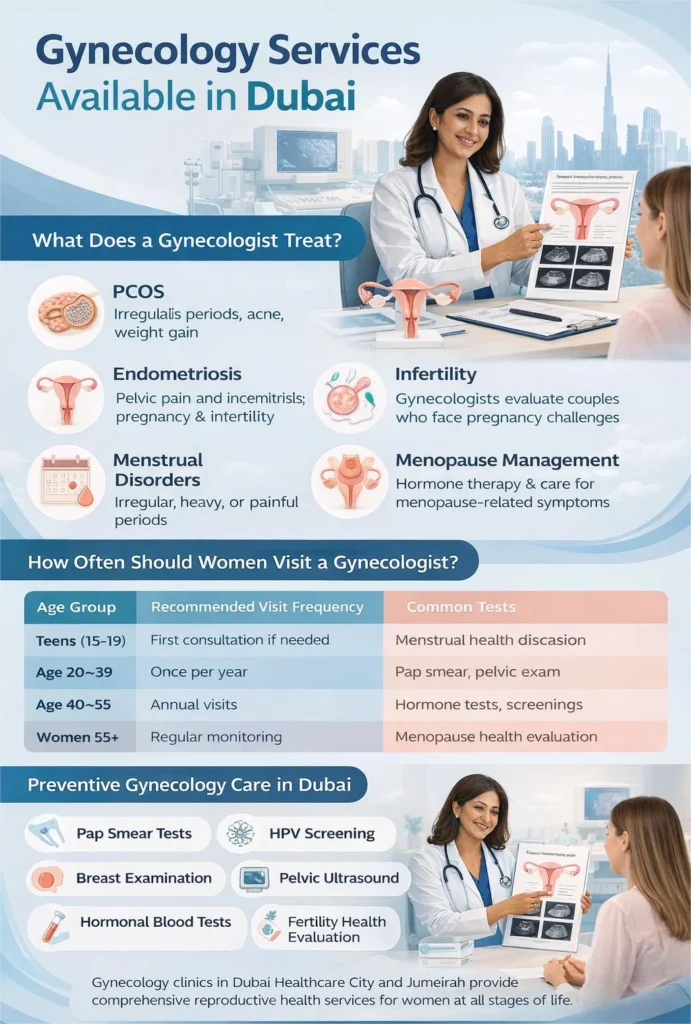
Most Common Women’s Health Conditions Treated by Gynecologists in Dubai
Women visiting a gynecology clinic in Dubai often seek treatment for conditions related to hormonal balance, reproductive health, fertility, and menstrual disorders. Clinics in Dubai Healthcare City, Jumeirah, Al Barsha, and Business Bay regularly treat thousands of patients each year dealing with these issues.
Early diagnosis is extremely important because many reproductive health conditions can worsen over time if left untreated. Fortunately, most DHA-licensed gynecologists in Dubai use modern diagnostic tools such as pelvic ultrasound, hormone testing, and fertility assessments to identify problems early.
Below are some of the most common women’s health conditions treated by gynecologists in Dubai.
Polycystic Ovary Syndrome (PCOS)
PCOS is one of the most frequently diagnosed hormonal disorders among women of reproductive age.
Common symptoms include:
• Irregular or missed periods
• Weight gain
• Acne and oily skin
• Excess facial hair
• Difficulty getting pregnant
Gynecologists diagnose PCOS using blood tests, hormone analysis, and pelvic ultrasound scans. Treatment often includes lifestyle guidance, medication to regulate hormones, and fertility support when needed.
Endometriosis
Endometriosis occurs when tissue similar to the lining of the uterus grows outside the uterus. This condition can cause severe pelvic pain and may affect fertility.
Typical symptoms include:
• Severe menstrual cramps
• Chronic pelvic pain
• Pain during intercourse
• Difficulty conceiving
Specialists in Dubai Healthcare City women’s clinics often treat endometriosis using medication, hormonal therapy, or minimally invasive surgery.
Infertility
Infertility affects many couples worldwide. If pregnancy does not occur after 12 months of trying, doctors recommend a fertility evaluation.
Gynecologists typically perform:
• Ovulation tracking
• Hormone testing
• Pelvic ultrasound
• Reproductive health screening
Many fertility clinics in Dubai also offer advanced treatments including IUI and IVF procedures.
Menstrual Disorders
Irregular periods, heavy bleeding, or painful cycles are common reasons women visit a gynecologist.
These symptoms may be caused by:
• Hormonal imbalance
• Uterine fibroids
• Thyroid disorders
• Stress or lifestyle changes
A gynecologist may recommend hormone therapy, medication, or further testing to identify the underlying cause.
Comparison Table Common Gynecological Conditions
| Condition | Main Symptoms | Diagnosis Method | Treatment Options |
|---|---|---|---|
| PCOS (Polycystic Ovary Syndrome) | Irregular periods, acne, weight gain, excess hair growth | Hormone blood tests, pelvic ultrasound | Medication, lifestyle changes, hormonal therapy |
| Endometriosis | Pelvic pain, painful periods, pain during intercourse | Ultrasound, laparoscopy examination | Hormonal therapy, pain management, surgery |
| Infertility | Difficulty conceiving after 12 months | Fertility testing, hormone analysis, ultrasound | IUI, IVF treatment, ovulation induction |
| Menstrual Disorders | Heavy bleeding, irregular cycles, severe cramps | Blood tests, pelvic examination, ultrasound | Medication, hormone therapy, lifestyle adjustments |
Women’s Health Statistics
According to global women’s health research:
• Around 1 in 10 women worldwide have PCOS
• Endometriosis affects over 190 million women globally
• Fertility challenges affect about 15% of couples
• Regular gynecology screening can significantly reduce cervical cancer risk
Sources: World Health Organization & Global Women’s Health Studies
Why Early Diagnosis Matters
Early medical care allows gynecologists to treat health issues before they develop into serious complications.
Women in Dubai Healthcare City and Jumeirah clinics are increasingly scheduling preventive gynecology appointments to monitor their reproductive health regularly.
Routine examinations such as Pap smears, hormone tests, and pelvic ultrasounds can detect problems at an early stage and improve treatment outcomes significantly.
Summary:
Most gynecological conditions are manageable when diagnosed early, which is why regular checkups with a qualified gynecologist in Dubai are essential.
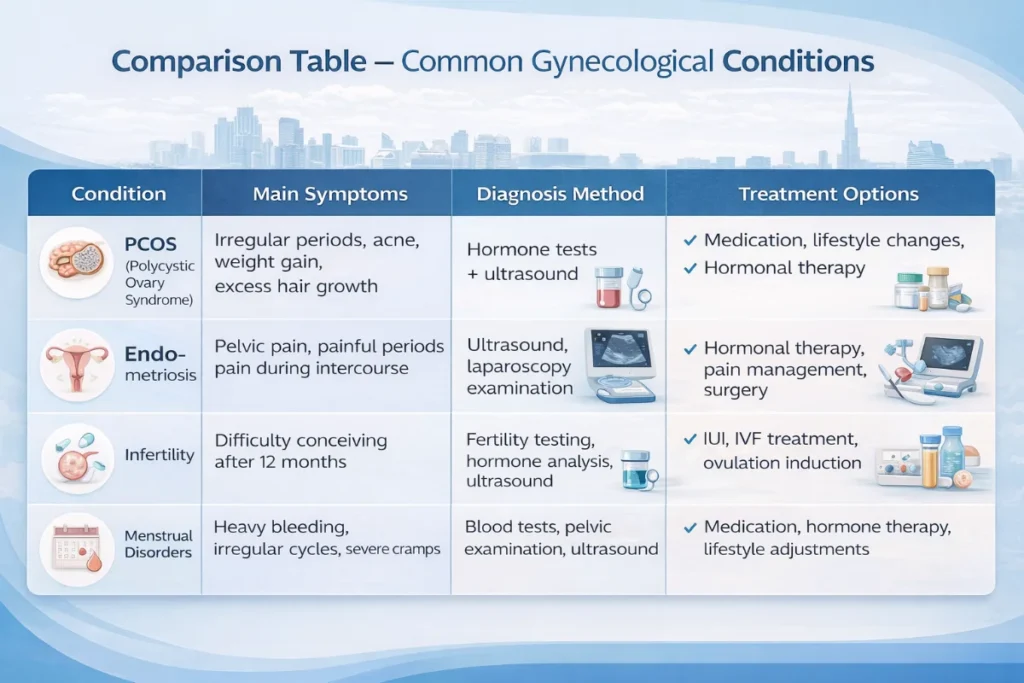
Pregnancy & Fertility Care in Dubai
Pregnancy and fertility care are among the most important services provided by gynecologists in Dubai. Clinics across Dubai Healthcare City, Jumeirah, Al Barsha, Business Bay, and Dubai Marina offer advanced maternal healthcare designed to support women throughout their pregnancy journey.
With modern diagnostic tools, internationally trained OB-GYN specialists, and state-of-the-art hospitals, Dubai has become one of the leading destinations in the Middle East for prenatal care, fertility treatments, and reproductive health services.
According to international fertility research, approximately 15% of couples globally experience fertility challenges, which is why early consultation with a fertility specialist in Dubai is highly recommended.
Prenatal Care in Dubai
Prenatal care refers to medical monitoring and support provided during pregnancy to ensure the health of both the mother and the baby.
Most OB-GYN clinics in Dubai Healthcare City provide structured prenatal care programs that include:
• Regular pregnancy checkups
• Ultrasound scans
• Blood tests and health screening
• Fetal growth monitoring
• Nutritional guidance
• Pregnancy risk assessment
A typical pregnancy involves 8–12 prenatal visits, depending on the stage of pregnancy and the mother’s health condition.
Prenatal monitoring helps doctors detect potential complications early, including:
Gestational diabetes
High blood pressure
Preterm labor risks
Fetal development concerns
Many hospitals in Dubai also offer 3D and 4D ultrasound technology, allowing parents to monitor their baby’s development in real time.
Summary: Prenatal care ensures a healthy pregnancy through continuous monitoring and early medical intervention when needed.
Fertility Evaluation & Treatment
Fertility evaluation is recommended if pregnancy does not occur after 12 months of trying (or 6 months for women over 35).
Gynecologists typically perform the following tests during fertility assessment:
1️⃣ Hormone blood tests
2️⃣ Ovulation monitoring
3️⃣ Pelvic ultrasound scans
4️⃣ Fallopian tube evaluation
5️⃣ Semen analysis for the partner
These tests help identify possible causes of infertility and guide doctors toward the most effective treatment plan.
IVF and Assisted Reproductive Technology (ART)
Dubai has several internationally recognized fertility clinics offering advanced assisted reproductive technologies (ART).
Common fertility treatments include:
• Ovulation induction
• Intrauterine Insemination (IUI)
• In Vitro Fertilization (IVF)
• Egg freezing
• Embryo transfer procedures
Many fertility clinics in Dubai Healthcare City and Jumeirah use advanced laboratory technology and genetic screening to improve IVF success rates.
STATS BOX Fertility & Pregnancy
According to global reproductive health research:
• Around 1 in 6 couples experience fertility challenges
• IVF success rates can range between 30%–50% depending on age
• Early fertility consultation significantly improves treatment outcomes
• Regular prenatal care reduces pregnancy complications
Sources: World Health Organization, Reproductive Medicine Studies
Pro Tip From Specialists
Pro Tip: Women planning pregnancy should schedule a pre-pregnancy consultation with a gynecologist. This allows doctors to review medical history, check hormone levels, and recommend supplements such as folic acid before conception.
Pre-pregnancy care can significantly improve pregnancy outcomes.
Why Dubai Is a Leading Fertility Destination
Dubai attracts patients from across the Middle East, Europe, and Asia for fertility treatment because of:
✔ Highly qualified international doctors
✔ Advanced medical technology
✔ Strict healthcare regulations (DHA licensed clinics)
✔ Modern hospitals and specialized fertility centers
Clinics located in Dubai Healthcare City are particularly well known for offering comprehensive women’s reproductive healthcare services under one roof.

How to Choose the Best Gynecologist in Dubai
Finding the best gynecologist in Dubai is one of the most important healthcare decisions a woman can make. With hundreds of clinics across Dubai Healthcare City, Jumeirah, Al Barsha, Business Bay, and Dubai Marina, patients often feel overwhelmed when trying to select the right specialist.
A qualified gynecologist does more than just treat medical conditions — they become a long-term partner in managing your reproductive health, pregnancy care, hormonal balance, and preventive screenings.
Healthcare experts recommend evaluating several key factors before selecting a women’s health clinic in Dubai.
1. Verify DHA License and Medical Credentials
The first step when choosing a gynecologist is verifying that the doctor is licensed by the Dubai Health Authority (DHA).
DHA licensing ensures that the doctor has:
• Completed recognized medical education
• Passed regulatory medical examinations
• Met UAE healthcare standards
• Maintained professional certification
You can verify DHA licenses through the official DHA website or by asking the clinic directly.
This step helps ensure you receive care from a qualified OB-GYN specialist in Dubai.
2. Look for Experience and Specialization
Not all gynecologists specialize in the same areas.
Some doctors focus on:
• Pregnancy and prenatal care
• Fertility treatment and IVF
• PCOS and hormonal disorders
• Menopause management
• Gynecological surgery
If you are seeking help for a specific condition such as PCOS treatment in Dubai or infertility evaluation, it is important to choose a specialist with experience in that field.
Many experienced OB-GYN doctors working in Dubai Healthcare City clinics have international training from Europe, the United States, or the United Kingdom.
3. Consider Clinic Facilities and Technology
Modern gynecology clinics in Dubai offer advanced diagnostic technology that improves both diagnosis and treatment outcomes.
Look for clinics that provide:
• Ultrasound imaging
• Fertility diagnostic tests
• Laboratory testing
• Minimally invasive surgical equipment
• Electronic health records
Hospitals and clinics in Dubai Healthcare City are particularly well known for their advanced medical infrastructure.
4. Check Patient Reviews and Reputation
Patient feedback can provide valuable insight into the quality of care offered by a clinic.
Look for:
• Verified Google reviews
• Testimonials from patients
• Clinic ratings on healthcare platforms
• Doctor reputation within the medical community
Many women searching for the best gynecologist in Dubai rely on patient reviews to evaluate comfort level, communication style, and professionalism.
5. Accessibility and Location
Convenience is another important factor when choosing a women’s health clinic.
Many patients prefer clinics located near major residential and business areas such as:
• Dubai Healthcare City
• Jumeirah
• Business Bay
• Al Barsha
• Dubai Marina
Choosing a nearby clinic makes it easier to attend routine checkups, pregnancy appointments, and follow-up consultations.
Expert Tip – Questions to Ask Your Gynecologist
Before selecting a doctor, consider asking the following questions:
• How many years of experience do you have?
• Are you licensed by the Dubai Health Authority?
• What treatments do you specialize in?
• What diagnostic technologies are available at your clinic?
• What hospitals are you affiliated with?
These questions help you understand the doctor’s experience and ensure that the clinic meets your healthcare needs.
Why Dubai Healthcare City Is a Popular Choice
Many patients prefer Chughtai clinic in Dubai Healthcare City because the area is designed specifically as a medical hub.
Dubai Healthcare City offers:
✔ Internationally accredited hospitals
✔ Multilingual medical staff
✔ Advanced diagnostic laboratories
✔ Specialized fertility and women’s health clinics
Because of these advantages, DHCC has become one of the most trusted locations for gynecology services in Dubai.
Summary:
Choosing the right gynecologist requires evaluating credentials, experience, clinic facilities, patient reviews, and location to ensure you receive high-quality medical care.

Gynecology Consultation Costs in Dubai
One of the most common questions women ask when searching for a gynecologist in Dubai is about consultation and treatment costs. The price of gynecology services can vary depending on the clinic, the doctor’s experience, diagnostic tests required, and the complexity of treatment.
Clinics located in Dubai Healthcare City, Jumeirah, Business Bay, and Al Barsha typically offer a wide range of women’s healthcare services with different pricing structures.
Understanding typical costs can help patients plan their healthcare more effectively.
Average Gynecology Consultation Cost in Dubai
The cost of visiting a DHA-licensed gynecologist in Dubai depends on the clinic and the specialist’s qualifications.
Typical consultation prices range between:
| Service | Average Cost in Dubai |
|---|---|
| Gynecologist consultation | AED 250 – AED 600 |
| Pap smear test | AED 200 – AED 500 |
| Pelvic ultrasound | AED 400 – AED 900 |
| Hormone blood tests | AED 300 – AED 800 |
| Fertility consultation | AED 500 – AED 1000 |
Clinics in Dubai Healthcare City sometimes charge slightly higher consultation fees due to specialized facilities and internationally trained specialists.
However, many clinics offer women’s health screening packages that combine multiple tests at discounted prices.
Pregnancy Care Cost in Dubai
Prenatal care packages vary depending on the hospital and pregnancy monitoring plan.
Typical costs include:
• Prenatal consultation: AED 300 – AED 700
• Pregnancy ultrasound: AED 400 – AED 1200
• Complete pregnancy package: AED 7000 – AED 15000
Many hospitals in Dubai provide maternity packages that include prenatal visits, ultrasound scans, and delivery care.
IVF and Fertility Treatment Costs
Fertility treatments can be more expensive because they involve specialized laboratory procedures and medical monitoring.
Typical costs for fertility services in Dubai include:
| Fertility Treatment | Average Cost |
|---|---|
| Fertility consultation | AED 500 – AED 1000 |
| Ovulation induction treatment | AED 1500 – AED 3000 |
| IUI procedure | AED 4000 – AED 7000 |
| IVF treatment | AED 15000 – AED 35000 |
Costs may vary depending on medication, laboratory testing, and individual treatment plans.
Factors That Affect Gynecology Costs
Several factors influence the total cost of treatment:
• Doctor’s experience and specialization
• Clinic location (Dubai Healthcare City clinics may cost more)
• Diagnostic tests required
• Complexity of treatment
• Hospital or clinic facilities
Many clinics also accept health insurance for gynecology consultations, especially for preventive care services.
How to Reduce Healthcare Costs
Patients can reduce expenses by:
✔ Choosing clinics that offer women’s health screening packages
✔ Checking insurance coverage for gynecology services
✔ Scheduling regular preventive checkups
✔ Comparing consultation fees before booking
Preventive care is often more affordable than treating advanced medical conditions.
FAQs
What does a gynecologist treat?
A gynecologist diagnoses and treats health conditions affecting the female reproductive system, including PCOS, infertility, menstrual disorders, hormonal imbalance, pregnancy care, and menopause management.
When should women visit a gynecologist?
Women should begin gynecology visits during their late teenage years or when they become sexually active. Most doctors recommend annual checkups for preventive health screening.
How much does a gynecologist consultation cost in Dubai?
A gynecologist consultation in Dubai typically costs between AED 250 and AED 600, depending on the clinic, location, and specialist experience.
What tests does a gynecologist perform?
Common tests include Pap smears, pelvic exams, hormone blood tests, fertility evaluations, and pelvic ultrasound scans.
How do I find a female gynecologist in Dubai?
Patients can search for DHA-licensed doctors through clinic websites, healthcare directories, and hospital platforms in areas such as Dubai Healthcare City and Jumeirah.
Conclusion
Women’s health is an essential part of overall wellbeing, and regular visits to a qualified gynecologist in Dubai help ensure early detection and treatment of reproductive health conditions.
Key takeaways from this guide:
• Gynecologists provide preventive, diagnostic, and treatment services for women’s health
• Dubai offers advanced healthcare facilities and internationally trained OB-GYN specialists
• Regular checkups help detect conditions like PCOS, infertility, and hormonal disorders early
If you are looking for professional gynecology services in Dubai Healthcare City or nearby areas, scheduling a consultation with a licensed specialist is the best step toward maintaining long-term reproductive health.
Book Your Gynecology Consultation at Chughtai Clinic Dubai
If you're looking for a trusted gynecologist in Dubai Healthcare City, Chughtai Clinic Dubai offers comprehensive women's healthcare services provided by DHA-licensed specialists. Our experienced OB-GYN doctors provide personalized care for reproductive health, pregnancy management, fertility consultations, PCOS treatment, and preventive screenings.
Located in the heart of Dubai Healthcare City, Chughtai Clinic combines advanced diagnostic technology with compassionate patient care to support women through every stage of life — from adolescence to menopause.
- ✔ Experienced DHA-licensed gynecologists
- ✔ Comprehensive women’s health services
- ✔ Fertility and pregnancy care
- ✔ Modern diagnostic and ultrasound facilities
- ✔ Convenient location in Dubai Healthcare City
Take the first step toward better women's health today.
📞 Call / WhatsApp: +971 44568952
🌐 Book Online: https://chughtaiclinic.ae
📍 Location: Dubai Healthcare City, Dubai

When to See a Gynecologist in Dubai: Symptoms, Warning Signs & the Right Time to Book an Appointment
Women often delay gynecology visits until symptoms become severe, but early consultation plays a critical role in maintaining long-term reproductive and hormonal health. In Dubai and across the UAE, access to advanced healthcare allows women to seek timely gynecologist consultations before conditions escalate into serious medical concerns.
A gynecologist is not only responsible for pregnancy care but also for diagnosing and managing a wide range of women’s health issues, including menstrual disorders, hormonal imbalance, infections, and preventive reproductive care. Knowing when to see a gynecologist in Dubai helps women take control of their health through early detection and proper treatment planning.
At Chughtai Clinic Dubai, gynecology services are provided with a strong focus on clinical accuracy, patient comfort, and privacy. Women are guided by experienced specialists, including Dr. Shabana, who manages gynecological concerns with an evidence-based and patient-centric approach aligned with UAE healthcare standards.
This guide explains the symptoms, warning signs, and preventive indicators that signal the right time to book a gynecologist appointment in Dubai.
Why Many Women Delay Visiting a Gynecologist
Despite awareness, many women postpone gynecologist visits due to busy schedules, fear of diagnosis, or the assumption that symptoms will resolve on their own. In reality, delayed gynecology care often leads to complications that could have been prevented through early intervention.
Common reasons for delay include:
- Ignoring irregular menstrual cycles
- Managing pain with temporary medication
- Lack of awareness about preventive gynecology
- Uncertainty about when symptoms become serious
Early consultation allows gynecologists to identify underlying conditions at a manageable stage, reducing long-term health risks and treatment complexity.
Signs & Symptoms That Mean You Should See a Gynecologist
Many women search for a gynecologist only after symptoms start affecting daily life. However, several gynecological signs indicate the need for early medical evaluation, even if the discomfort feels manageable. Recognizing these symptoms helps prevent complications and supports long-term women’s health.
Irregular or Missed Periods
Menstrual irregularities are one of the most common reasons women consult a gynecologist in Dubai. This includes:
- Missed periods without pregnancy
- Very frequent or very delayed cycles
- Extremely heavy or unusually light bleeding
Such patterns may indicate hormonal imbalance, PCOS, thyroid issues, or other underlying conditions that require professional assessment.
Severe Pelvic or Lower Abdominal Pain
Persistent pelvic pain or lower abdominal discomfort should never be ignored. Pain that:
- Occurs outside the menstrual cycle
- Worsens over time
- Interferes with daily activities
may be linked to gynecological infections, ovarian conditions, or reproductive system disorders. A gynecologist can determine the cause through clinical evaluation and diagnostic testing.
Unusual Vaginal Discharge or Recurrent Infections
Changes in vaginal discharge, odor, or recurring infections often signal gynecological imbalance. These symptoms may indicate bacterial, fungal, or hormonal issues that require targeted treatment rather than repeated self-medication.
Pain During Periods or Intercourse
While mild discomfort can be normal, severe pain during menstruation or intercourse is not. This may be associated with conditions such as endometriosis, pelvic inflammation, or hormonal irregularities that should be diagnosed early.
Hormonal Symptoms Affecting Daily Life
Hormonal changes can present through:
- Sudden weight gain or loss
- Acne flare-ups
- Mood swings or fatigue
- Hair thinning or excessive hair growth
When these symptoms persist, a gynecologist can help identify hormonal imbalances and create a treatment plan focused on long-term stability.
At Chughtai Clinic Dubai, women experiencing these symptoms receive structured gynecological evaluations under experienced care, including consultations with Dr. Shabana, who focuses on identifying root causes rather than temporary symptom control.
Pregnancy-Related Symptoms That Require Immediate Gynecologist Care
Pregnancy is a sensitive phase where even mild symptoms can require professional evaluation. In Dubai and across the UAE, timely gynecologist care during pregnancy helps protect both maternal and fetal health. Women should never rely on assumptions or delay consultations when pregnancy-related symptoms appear.
Early Pregnancy Confirmation and Initial Care
As soon as pregnancy is suspected or confirmed, a gynecologist visit is essential. Early consultation helps:
- Confirm pregnancy safely
- Assess overall reproductive health
- Identify early risk factors
- Plan structured prenatal care
Early medical guidance sets the foundation for a healthier pregnancy journey.
Bleeding or Pain During Pregnancy
Any bleeding, spotting, or persistent abdominal pain during pregnancy requires immediate gynecologist evaluation. These symptoms may indicate complications that need prompt medical attention and monitoring.
Ignoring such signs can increase risks for both the mother and the developing baby.
Severe Nausea, Dizziness, or Weakness
While mild nausea can be common, excessive vomiting, dizziness, or extreme weakness should not be overlooked. These symptoms may be linked to hormonal imbalance, nutritional deficiencies, or pregnancy-related conditions that need clinical assessment.
Prenatal Monitoring and Routine Checkups
Regular prenatal visits allow gynecologists to:
- Monitor fetal development
- Track maternal health indicators
- Manage pregnancy-related changes safely
- Detect issues before they escalate
Structured prenatal care is essential, even in pregnancies that initially appear uncomplicated.
At Chughtai Clinic Dubai, pregnancy-related gynecology care is handled through planned evaluations and consistent follow-ups. Dr. Shabana provides pregnancy guidance focused on safety, early detection, and personalized care aligned with UAE medical standards.
Preventive Gynecology Visits – Not Just for Emergencies
Many women associate gynecology visits only with pain, pregnancy, or visible symptoms. In reality, preventive gynecology care is one of the most important aspects of women’s health. Regular checkups help detect potential issues early often before symptoms appear.
Routine Gynecology Checkups
Routine gynecology visits allow doctors to assess overall reproductive and hormonal health. These visits typically focus on:
- Menstrual cycle patterns
- Hormonal balance
- Reproductive system health
- Early signs of gynecological conditions
Even when no symptoms are present, routine evaluations help maintain long-term health stability.
Hormonal Health & Menstrual Monitoring
Hormonal changes can develop gradually and may not be immediately noticeable. Preventive visits help gynecologists monitor:
- Cycle regularity
- Hormonal fluctuations
- Early indicators of imbalance
Early detection allows treatment plans to remain simple and effective, reducing the risk of future complications.
Preventive Screenings & Women’s Wellness
Preventive gynecology also includes health screenings that support early diagnosis. These screenings help identify issues at a stage where they are easier to manage and less likely to affect fertility or quality of life.
At Chughtai Clinic Dubai, preventive gynecology is treated as a core part of women’s healthcare. Dr. Shabana emphasizes regular evaluations and wellness-focused care to help women stay healthy rather than waiting for problems to arise.
How Often Should Women Visit a Gynecologist in Dubai?
One of the most common questions women ask is how frequently they should see a gynecologist. The answer depends on age, health history, and whether symptoms are present. In Dubai and across the UAE, regular gynecology visits are considered a key part of preventive healthcare.
Routine Visits for General Women’s Health
For women without active symptoms, a routine gynecology visit is generally recommended at least once a year. These visits help:
- Monitor menstrual and hormonal health
- Detect early signs of gynecological conditions
- Maintain reproductive system wellness
Annual checkups allow gynecologists to identify subtle changes before they develop into medical concerns.
Symptom-Based or Condition-Specific Visits
Women experiencing ongoing symptoms should not rely on fixed timelines. A gynecologist should be consulted whenever symptoms such as pain, irregular periods, or hormonal changes appear. Follow-up frequency is then determined based on:
- Diagnosis
- Treatment response
- Individual health needs
Pregnancy, Hormonal Disorders, and Follow-Ups
Pregnant women, or those managing hormonal or reproductive conditions, usually require more frequent visits. Regular monitoring ensures:
- Safe progression of pregnancy
- Effective management of hormonal imbalances
- Adjustment of treatment plans when needed
At Chughtai Clinic Dubai, gynecology consultations are scheduled based on medical necessity rather than a one-size-fits-all approach. Under the care of Dr. Shabana, women receive personalized follow-up plans focused on consistent monitoring and long-term health outcomes.
What Happens During a Gynecologist Consultation in Dubai
Many women delay booking an appointment because they are unsure what a gynecology consultation involves. Understanding the consultation process helps reduce anxiety and allows women to approach their visit with confidence. In Dubai and across the UAE, professional gynecology clinics follow a structured, respectful, and confidential approach.
Initial Discussion & Medical History
A gynecologist consultation usually begins with a detailed discussion about:
- Current symptoms or concerns
- Menstrual cycle history
- Hormonal or reproductive health issues
- Pregnancy-related questions, if applicable
This step helps the doctor understand the patient’s condition before moving forward with any examination or recommendations.
Clinical Examination (Only When Necessary)
Physical or gynecological examinations are performed only when medically required and always with patient consent. Clinics in Dubai follow strict privacy and ethical standards to ensure comfort and dignity throughout the process.
Diagnosis, Tests & Medical Guidance
Based on symptoms and clinical findings, the gynecologist may recommend:
- Hormonal evaluations
- Pregnancy-related tests
- Infection screening or imaging (if needed)
Clear explanations are provided so patients understand their condition, treatment options, and next steps.
Follow-Up Planning & Ongoing Care
Effective gynecology care does not end with one visit. Follow-ups are planned to:
- Monitor response to treatment
- Adjust care plans if required
- Support long-term women’s health
At Chughtai Clinic Dubai, consultations are handled with clarity and professionalism. Women are guided by experienced specialists, including Dr. Shabana, who focuses on accurate diagnosis, patient education, and structured follow-up care.
Why Women Trust Chughtai Clinic Dubai for Gynecology Care
Choosing the right gynecology clinic is about more than availability it is about trust, clinical expertise, and consistent care. Women in Dubai and across the UAE look for clinics that combine qualified specialists, ethical medical standards, and a patient-first approach.
At Chughtai Clinic Dubai, gynecology services are designed to support women at every stage of life, from preventive care to pregnancy management and hormonal health. The clinic follows UAE healthcare regulations and prioritizes privacy, accuracy, and continuity of care.
Experienced Gynecologist with a Patient-Centered Approach
Gynecology care at the clinic is led by Dr. Shabana, an experienced gynecologist known for her structured consultations and evidence-based treatment planning. Her approach focuses on:
- Identifying root causes, not just symptoms
- Clear communication and patient education
- Personalized care plans based on medical needs
This approach helps women feel informed, comfortable, and confident in their healthcare decisions.
Comprehensive Women’s Health Services
The clinic offers a wide range of gynecology services, allowing women to receive consistent care under one medical facility. This integrated approach improves diagnosis accuracy and long-term health outcomes.
Telehealth and In-Clinic Consultation Options
Understanding modern lifestyle demands, the clinic provides both in-clinic and telehealth consultation options for non-emergency gynecology concerns. This flexibility allows women to access professional guidance without unnecessary delays.
Insurance Support and Transparent Care
Clear consultation processes, insurance acceptance, and transparent communication help remove uncertainty for patients seeking gynecology care in Dubai.
FAQs
When should I see a gynecologist immediately?
If you experience severe pain, abnormal bleeding, pregnancy-related symptoms, or persistent hormonal issues, you should book a gynecologist appointment without delay.
Is it okay to visit a gynecologist without symptoms?
Yes. Preventive gynecology visits help detect issues early and support long-term reproductive and hormonal health.
Can I consult a gynecologist online in Dubai?
Yes. Telehealth consultations are available for follow-ups and non-emergency gynecology concerns.
How do I choose the right gynecologist in Dubai?
Look for DHA licensing, experience, clinic credibility, patient comfort, and access to follow-up care.
Best Gynecologist in Dubai: The Definitive Guide to Choosing the Right Women’s Health Doctor in UAE
Women’s health is a multifaceted journey that evolves through different biological stages, from puberty and reproductive years to menopause and beyond. Each of these stages requires specialized medical care, timely diagnosis, and a physician who possesses a deep understanding of both physical anatomy and complex hormonal well-being. In a global hub like Dubai, where healthcare standards are among the highest in the world and the number of options can be overwhelming, choosing the best gynecologist in Dubai is one of the most important decisions a woman can make for her long-term wellness.
From routine gynecology checkups to high-risk pregnancy care, management of complex hormonal imbalances like PCOS, and preventive screenings for life-threatening conditions, a qualified gynecologist is a lifelong partner in health. Clinics that offer comprehensive services, employ DHA-licensed specialists, and maintain a patient-first philosophy are the gold standard in the UAE.
At Chughtai Clinic Dubai, women have access to world-class professional gynecology care led by highly experienced specialists. Among them is Dr. Shabana, a trusted name in the Dubai medical community known for her empathetic, patient-centric approach and her clinical precision. Chughtai Clinic emphasizes accurate diagnostic protocols, strict patient privacy, and evidence-based treatments that align perfectly with the rigorous standards set by the UAE healthcare authorities. This guide serves as an exhaustive resource to help you navigate the healthcare landscape and make an informed choice for your reproductive and hormonal health.
What Truly Defines the “Best” Gynecologist in Dubai?
In a city as competitive as Dubai, many doctors claim to be the best. However, for a patient, the “best” choice is defined by a combination of legal credentials, clinical experience, and the quality of the interpersonal relationship between doctor and patient.
1. Medical Qualifications and DHA Licensing
The first and most non-negotiable factor is the Dubai Health Authority (DHA) license. The DHA is the regulatory body that oversees all healthcare professionals in the emirate. A DHA license is not just a piece of paper; it is a guarantee that the doctor has:
- Verified medical degrees from recognized international institutions.
- Completed the required years of clinical residency and specialized training.
- Passed rigorous examinations to practice in Dubai.
- Complied with Continuous Medical Education (CME) requirements to stay updated on the latest medical advancements.
When you visit a specialist like Dr. Shabana at Chughtai Clinic, you are consulting with a professional whose credentials have been thoroughly vetted to meet the highest safety and quality benchmarks.
2. Clinical Experience in Diverse Conditions
The human body is complex, and gynecological issues often overlap with other health concerns. The best gynecologists are those who have spent years treating a diverse patient population. Experience matters specifically in:
- Complex Hormonal Management: Understanding that symptoms like acne or weight gain might be linked to underlying endocrine issues.
- Early Detection: The ability to spot subtle signs of abnormalities during a routine pelvic exam or ultrasound.
- Cultural Competence: In a city with over 200 nationalities, a doctor must understand the different cultural backgrounds and health predispositions of their patients.
3. Advanced Clinic Infrastructure and Diagnostic Technology
A doctor is only as good as the tools they have at their disposal. A top-tier gynecology clinic must be equipped with modern diagnostic technology, including:
- High-resolution Ultrasound machines for pelvic and fetal monitoring.
- In-house laboratory services for rapid blood work and hormonal assays.
- Sterile environment for minor procedures.
- Digital record-keeping systems that ensure your medical history is tracked accurately over the years.
4. Patient-Centered Care and Ethical Privacy Standards
Privacy is a cornerstone of gynecological care. Women are often discussing their most intimate health concerns, and the environment must reflect that. The best clinics in Dubai provide:
- Soundproof consultation rooms.
- Strict data protection for medical records.
- A “no-judgment” zone where patients can discuss sexual health, fertility, and mental well-being openly.
Exploring the Specialized Types of Gynecologists in the UAE
Gynecology is a broad field, and depending on your stage of life or specific health concern, you might need a doctor who specializes in a particular niche. Understanding these distinctions is crucial for finding the right care.
The General Gynecologist: Your Primary Health Partner
A general gynecologist is the “GP” of women’s reproductive health. Every woman should have a general gynecologist for her annual exams. Their role includes:
- Preventive Screenings: Performing Pap smears to screen for cervical cancer and conducting breast exams.
- Contraception Counseling: Helping women choose the right birth control method based on their lifestyle and health history.
- Basic Infection Treatment: Managing common issues like UTIs or yeast infections.
- Health Education: Providing guidance on nutrition, exercise, and menstrual hygiene.
Pregnancy and Maternity Specialists (Obstetricians)
While many gynecologists are also obstetricians (OB-GYNs), some focus more heavily on the maternity journey. This is a critical specialization because it involves monitoring two lives simultaneously. Their expertise covers:
- Pre-conception Counseling: Preparing the body for pregnancy through vitamins (like Folic Acid) and health checks.
- Antenatal Care: The 40-week journey of monitoring fetal growth and maternal health.
- High-Risk Pregnancy Management: Caring for mothers with gestational diabetes, hypertension (preeclampsia), or multiple births (twins/triplets).
- Postpartum Care: Supporting the mother in the “fourth trimester” as her body recovers from childbirth.
Hormonal and Reproductive Endocrinologists
These specialists focus on the intricate balance of hormones. In the UAE, where lifestyle factors can often lead to hormonal disruptions, these doctors are in high demand. They treat:
- PCOS (Polycystic Ovary Syndrome): A condition affecting millions that causes irregular cycles and fertility issues.
- Thyroid Dysfunction: Which can mimic gynecological symptoms.
- Early Menopause: Managing the transition for women going through perimenopause.
- Infertility: Investigating why a couple may be struggling to conceive and offering initial treatments or referrals.
Preventive Women’s Health Specialists
The modern medical approach is shifting from “reactive” to “proactive.” Preventive specialists focus on:
- Genetic Screening: Assessing the risk of hereditary cancers.
- Bone Density: Monitoring for osteoporosis, especially in older women.
- Vaccinations: Administering the HPV vaccine to prevent cervical cancer.
At Chughtai Clinic Dubai, the approach is integrated. Whether you need a routine checkup or specialized hormonal management, the clinic provides a pathway to the right specialist, ensuring you aren’t just a number, but a patient with a personalized care plan.
The Gender Factor: Why Many Women in Dubai Prefer a Female Gynecologist
Dubai is a unique melting pot of cultures, religions, and traditions. For many women, the choice between a male and female gynecologist is not just a matter of preference but a matter of cultural comfort and personal ease.
The Comfort of Shared Experience
There is an inherent “common ground” when a woman consults a female doctor. A female gynecologist has a lived understanding of:
- The physical sensation of menstrual cramps.
- The emotional fluctuations associated with hormonal cycles.
- The anxieties related to pregnancy and childbirth.
This shared experience often leads to a more empathetic consultation style. Patients report feeling more “heard” and less “rushed” when speaking with doctors like Dr. Shabana, who is known for her ability to build a strong rapport with her patients.
Cultural and Religious Sensitivity
In the UAE, many women come from backgrounds where modesty is a high priority. A female gynecologist ensures that the patient feels respected and culturally safe during physical examinations. This leads to:
- Lower Stress Levels: Patients are more likely to attend regular screenings if they know they will be treated by a female specialist.
- Open Communication: Women are often more willing to disclose sensitive symptoms—such as libido changes or domestic concerns—to another woman.
The Role of Communication in Care
Effective healthcare is 50% medical science and 50% communication. A female gynecologist in a multicultural city like Dubai often excels in:
- Active Listening: Taking the time to understand the patient’s lifestyle and stressors.
- Patient Education: Explaining complex medical terms in a way that empowers the woman to take charge of her health.
- Long-term Relationship Building: Many women stay with the same gynecologist for decades, from their first period through their last pregnancy and into menopause.
Deep Dive into Common Women’s Health Issues in the UAE
To understand why choosing the right doctor is so critical, we must look at the specific health challenges women face in this region. The environment, lifestyle, and genetics all play a role in the prevalence of certain conditions.
1. The Epidemic of PCOS and PCOD
Polycystic Ovary Syndrome (PCOS) is exceptionally common in the UAE. It is a hormonal disorder characterized by enlarged ovaries with small cysts on the outer edges.
- Symptoms: Irregular periods, excess androgen levels (resulting in facial hair or acne), and obesity.
- The Dubai Context: The sedentary lifestyle and high-calorie diets sometimes found in urban environments can exacerbate PCOS.
- Treatment at Chughtai Clinic: Specialists like Dr. Shabana don’t just prescribe birth control to “mask” the symptoms. They look at metabolic health, insulin resistance, and lifestyle changes to treat the root cause.
2. Irregular Periods and Hormonal Imbalance
Irregularity is often a signal that something else is wrong. It could be stress, a thyroid issue, or extreme weight changes. A gynecologist’s job is to play “medical detective” to find out why the cycle is disrupted.
- Diagnosis: This involves blood tests to check levels of Estrogen, Progesterone, LH, and FSH.
- Long-term Impact: Unregulated cycles can lead to uterine lining issues and future fertility struggles.
3. Pregnancy Care in a High-Stress Environment
Dubai is a fast-paced city. Working women often balance demanding careers with pregnancy. This makes prenatal care even more vital.
- Standard Care: Includes monthly checkups, ultrasounds at key milestones (12 weeks, 20 weeks), and glucose challenge tests.
- Mental Health: Modern gynecology also looks at prenatal and postpartum depression, ensuring the mother’s mental health is as stable as her physical health.
4. Pelvic Pain and Endometriosis
Endometriosis is a painful condition where tissue similar to the lining of the uterus grows outside the uterus. It is often misdiagnosed as “just a painful period.”
- The Importance of a Specialist: An experienced gynecologist will know when a patient’s pain is abnormal and will suggest the necessary scans or laparoscopic investigations to provide relief.
5. Preventive Screenings: The Life Savers
- Pap Smears: Recommended every 3 to 5 years for most women to prevent cervical cancer.
- HPV Testing: Identifying the virus that causes most cervical cancers.
- Breast Exams: Teaching women how to perform self-exams and referring them for mammograms when necessary.
Navigating the Decision: How to Select Your Gynecologist
With so many clinics in areas like Jumeirah, Dubai Healthcare City, and Deira, how do you narrow it down? Use this checklist:
1. Convenience and Location
Don’t underestimate the importance of a clinic that is easy to reach. During pregnancy or if you have a painful condition, you don’t want to be stuck in an hour of traffic. Chughtai Clinic offers a central, accessible location that makes regular visits stress-free.
2. Telehealth Options
In the post-pandemic era, telehealth is a must. If you just need to discuss lab results or ask a quick question about your medication, you shouldn’t always have to drive to the clinic. Look for a doctor who offers digital follow-ups.
3. Insurance and Financial Transparency
Healthcare in Dubai can be expensive.
- Check the Network: Always call your insurance provider to see if the clinic and the specific doctor are in your network.
- Ask About Costs: A reputable clinic will be transparent about the cost of a consultation, an ultrasound, and lab tests before you commit.
4. Reviewing the Reputation
While Google reviews are helpful, look for specific mentions of the doctor’s bedside manner and the clinic’s efficiency. Dr. Shabana is frequently cited for her patience and her ability to make patients feel at ease, which is a key indicator of high-quality care.
When to Seek Urgent Gynecological Care
Many women tend to “wait and see” if a symptom goes away. However, in gynecology, early intervention is often the difference between a simple treatment and a major surgery. You should book an appointment immediately if you experience:
- Abnormal Bleeding: Bleeding between periods, after intercourse, or after menopause is never “normal” and must be investigated.
- Sudden Pelvic Pain: Sharp, stabbing pain can indicate an ovarian cyst rupture or an ectopic pregnancy (if you are pregnant).
- Severe Infection Signs: High fever accompanied by pelvic pain or unusual discharge.
- Lumps in the Breast: Any new lump or change in breast tissue requires an urgent clinical exam.
- Pregnancy Red Flags: Any bleeding, decreased fetal movement, or severe headaches during pregnancy.
By choosing a clinic like Chughtai Clinic Dubai, you ensure that you have a medical home where you can be seen quickly by professionals who already know your medical history.
What to Expect During Your Appointment at Chughtai Clinic
For many, a visit to the gynecologist can be anxiety-inducing. Knowing exactly what happens can help ease those nerves.
Step 1: The Initial Consultation
The doctor will sit with you to discuss your “chief complaint.” You will be asked about:
- The date of your last period.
- Your history of pregnancies or surgeries.
- Any medications or supplements you are taking.
- Your family history of cancer or reproductive issues.
Step 2: The Physical Examination
If necessary, the doctor will perform a physical exam. This is done with the utmost respect for your privacy, often with a female nurse present in the room (a standard “chaperone” policy in the UAE).
Step 3: Diagnostic Testing
If the doctor suspects a hormonal issue or infection, they will order blood tests or a pelvic ultrasound. At Chughtai Clinic, the proximity of laboratory services means your results are processed accurately and efficiently.
Step 4: The Treatment Plan
The doctor will explain their findings. This might include:
- A prescription for medication.
- Lifestyle and dietary recommendations (especially for PCOS).
- A schedule for follow-up visits to monitor your progress.
The Philosophy of Care at Chughtai Clinic Dubai
What sets Chughtai Clinic apart in the crowded Dubai healthcare market is a commitment to the “whole woman.” They understand that a woman’s health is not just about her reproductive organs; it’s about her stress levels, her nutrition, her age, and her environment.
Under the care of Dr. Shabana, the clinic has built a reputation for:
- Evidence-Based Medicine: Using the latest clinical guidelines to ensure safe outcomes.
- Empathetic Listening: Giving women the time they need to express their concerns.
- Efficiency: Respecting the patient’s time through streamlined booking and consultation processes.
- Holistic Management: Integrating different aspects of health to ensure long-term stability rather than just a “quick fix” for symptoms.
Final Thoughts: Investing in Your Future Self
Choosing the best gynecologist in Dubai is an investment in your future. Whether you are a young woman navigating the complexities of your cycle, an expectant mother looking for the safest hands for your baby, or a woman entering the wisdom of her later years, you deserve care that is professional, private, and precise.
In the UAE, where medical excellence is the standard, don’t settle for anything less than a doctor who makes you feel confident and a clinic that prioritizes your safety. With specialists like Dr. Shabana at Chughtai Clinic Dubai, you can rest assured that your health is in the hands of experts who truly care.
Frequently Asked Questions (FAQs)
1. At what age should a girl first visit a gynecologist?
The American College of Obstetricians and Gynecologists (ACOG) recommends the first visit between the ages of 13 and 15. This visit is usually just a talk to establish a relationship and discuss puberty.
2. Are gynecologists in Dubai covered by basic insurance?
Most insurance plans in Dubai cover gynecology consultations, but the level of coverage for tests, ultrasounds, and maternity care depends on your specific policy. Always verify with your provider.
3. Can a gynecologist help with weight loss?
Yes, if the weight gain is caused by hormonal issues like PCOS or hypothyroidism. A gynecologist can help balance your hormones, which makes lifestyle changes more effective.
4. Is it possible to see a female gynecologist for all procedures?
Absolutely. Clinics like Chughtai Clinic prioritize female-led care for women who prefer it, ensuring a female doctor and female nursing staff are available for all exams and procedures.
5. How can I prepare for my first appointment?
Track your last 3 menstrual cycles, make a list of any medications you take, and write down any symptoms or questions you have so you don’t forget them during the consultation.